Biophilic design and porcelain tiles: the perfect match for natural spaces
10 dicembre 2025
In a world where humans have increasingly taken over the land, several solutions have been developed to allow nature to be harmoniously integrated into living spaces. This concept is encapsulated in the term "biophilic design", a new way of approaching architecture and interior design that aims to bring nature into people's daily lives.
What is biophilic design and how does it apply?
Biophilic design is an approach that seeks to integrate natural elements into built environments, creating spaces that promote physical and psychological well-being. This concept is based on biophilia, the idea that humans have an intrinsic connection with nature.
Applying biophilic design means creating environments that encourage natural light, the use of natural materials, and the presence of plants, thereby improving quality of life and mental well-being.
This design draws inspiration from nature to offer a range of emotional and physical benefits. It has been shown that environments rich in greenery and "green" references can reduce stress, improve mood, and enhance focus.
Biophilic design in the home: creating a nature-inspired living space
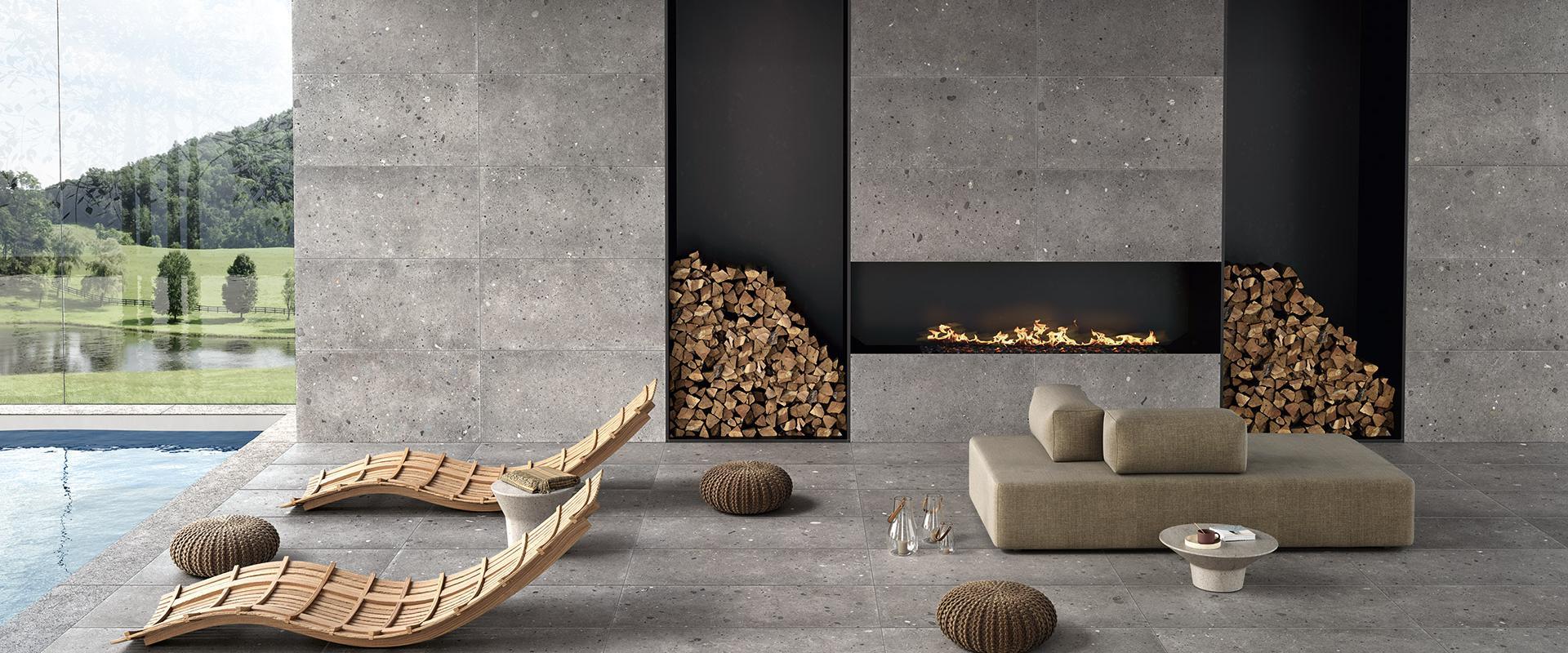
Biophilic design can also be applied in the home. In this case, we can use furniture or finishes that evoke natural materials. Porcelain tiles, for example, are a valid alternative to raw materials, as they can replicate various textures of nature, offering versatile solutions for all rooms.
Nature-inspired flooring and surfaces: wood- and stone-effect porcelain tiles
Emilgroup porcelain tiles with wood or stone finishes offer the opportunity to bring nature into your home, recreating environments that evoke the essence of the earth, forests, and mountains. The beauty of natural surfaces combines with the durability and practicality of porcelain tiles, allowing for spaces that have an authentic and sophisticated appearance, without compromising on resistance.
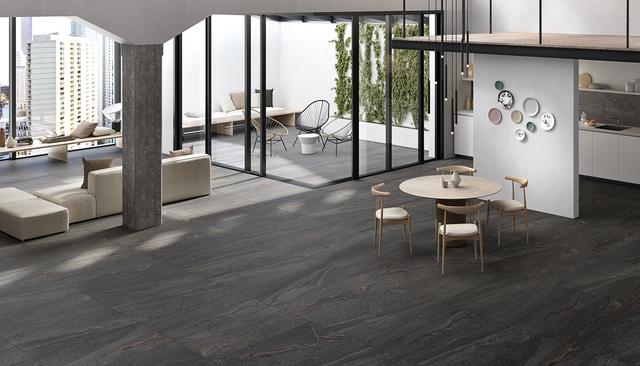
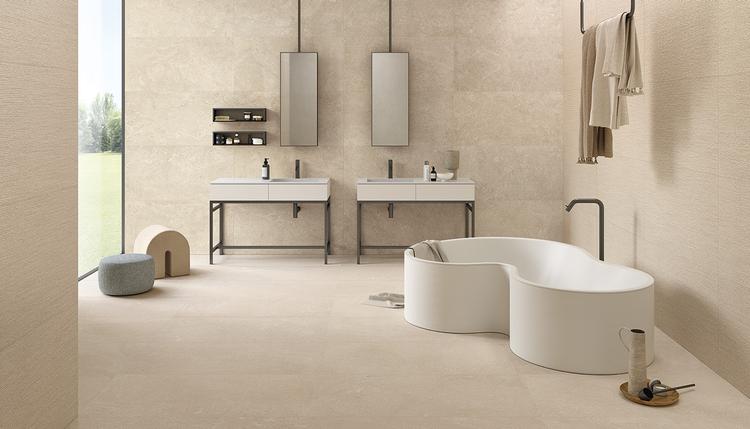
For example, the stone effect is embodied in the MaPierre by Emilceramica collection, which reproduces the noble stone of Burgundy in two variants: the Noble, sober and minimal, and the Ancienne, rich in contrasts and three-dimensional textures. The tiles in this collection, with their color contrasts and tactile surface, evoke an atmosphere of serenity, with soft shades reminiscent of smoothed stones.
When installed in large formats, they create an environment that feels like a natural quarry, surrounded by the purity of Burgundy stones. Perfect for monochromatic interiors or for those who want to play with vibrant contrasts, adding a touch of modernity and freshness with pops of color.
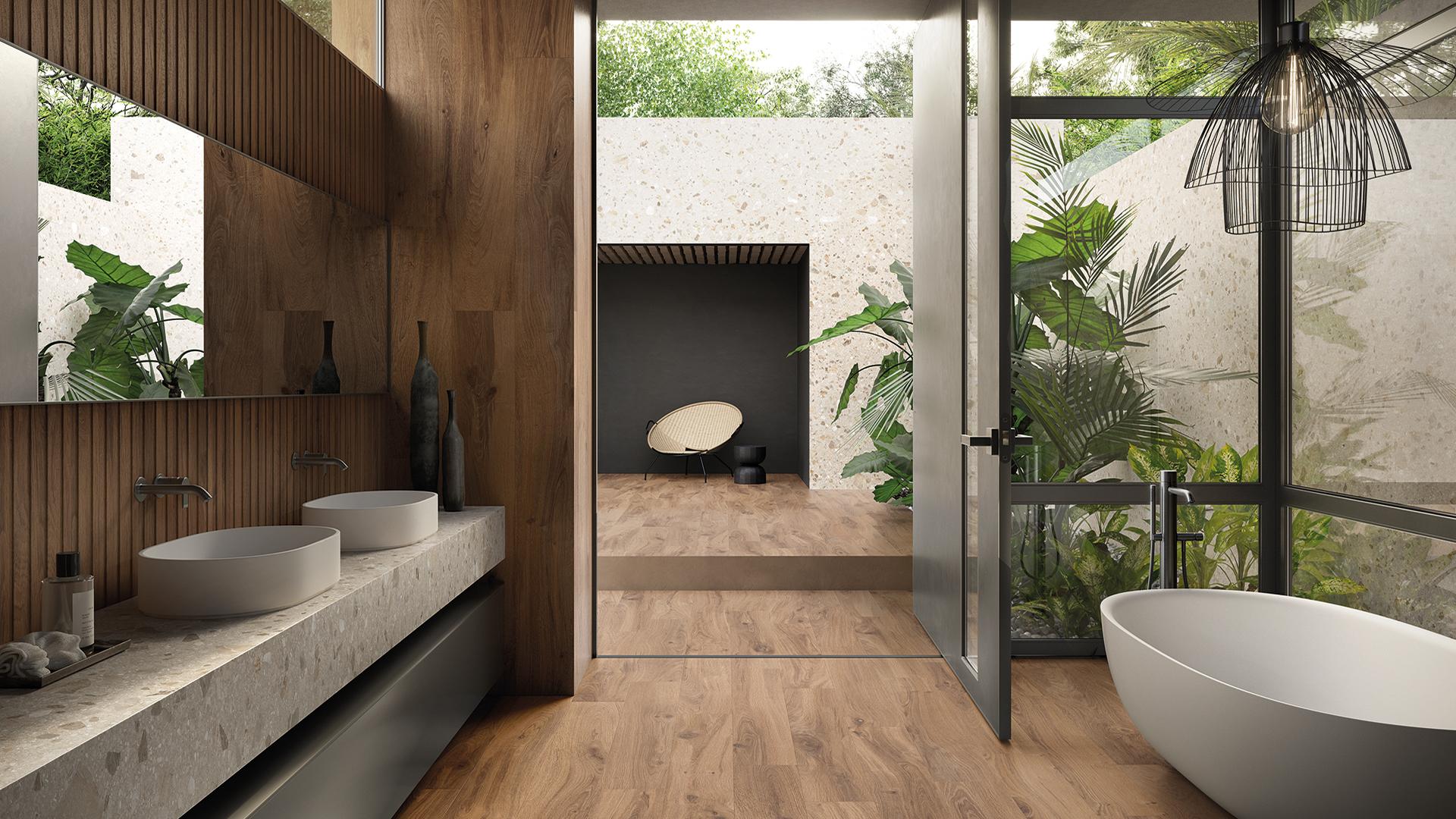
For those seeking a warmer, more enveloping atmosphere, the I-Wood by Ergon collection perfectly replicates the veins and knots of oak, evoking the distinctive charm of French oak forests. The steam treatment enhances the natural colors of the wood, creating an effect that transforms the environment into a space where nature takes center stage. Available in three variants – Rovere Pallido, Rovere Dorato, Rovere Imbrunito – this collection pairs well with both classic and modern styles and blends perfectly with neutral or dark colors, adding a touch of natural elegance.
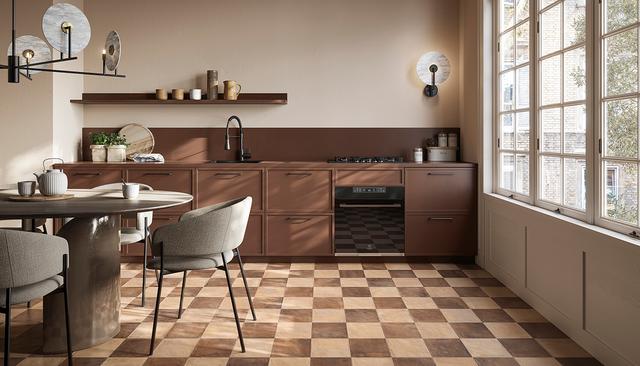
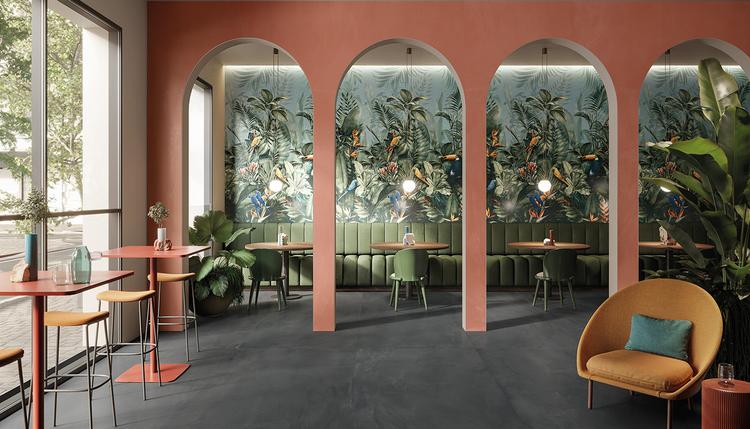
If a bolder, more modern interpretation of nature is desired, the Pigmento by Ergon collection is the perfect choice. Versions like Eden, Carioca and Peonia, in shades such as sage green, anthracite, cream, and amaranth, bring the energy of nature into indoor spaces, with an effect reminiscent of wallpaper. With its nine balanced color variations, Pigmento adapts to different styles, adding a vibrant and natural touch to any room.
Biophilic Colors and Their Impact on Interiors
Biophilic colors are used to create an environment that fosters psychological well-being. Tones like green, brown, beige, and blue—reminiscent of forests, soil, sand, and skies—create calm, reduce stress, and foster a connection with nature. These shades can be applied to walls, furnishings, and surfaces to build environments that are both visually and emotionally soothing.
Biophilic architecture in public spaces: shaping the urban environments of the future
Biophilic architecture in public spaces is gaining increasing attention, as it offers innovative solutions to improve quality of life in cities. Integrating natural elements such as plants, water, natural light and diverse materials into urban spaces also contributes to the physical and psychological well-being of the community. This type of architecture aims to create spaces that stimulate a deeper connection with nature, even in densely populated urban settings. Incorporating nature into cities doesn't just mean adding gardens and plants; it means creating a balance between urban life and the natural environment.
Green spaces and outdoor surfaces: porcelain tiles for plazas and parks
Porcelain tiles are proving to be an ideal choice for paving green spaces and outdoor areas, such as plazas and parks, due to their resistance, versatility, and ability to integrate harmoniously with the surrounding natural environment, with material effects that recall stone, wood and marble. These tiles are particularly suitable for public spaces, as they offer excellent performance in terms of durability and resistance to weather conditions, maintaining their appearance over time, even in the presence of rain, wind, and temperature fluctuations, or benefiting from the ease of cleaning and resistance to stains that characterize this material.
In the context of biophilic design, integrating porcelain surfaces in parks and plazas represents a smart solution for public space design, offering beauty, practicality and sustainability.
Biophilic design examples in urban projects
Cities are increasingly moving toward the use of biophilic design, aiming to create environments that foster a connection with nature, especially in densely populated areas. One example is the Bosco Verticale in Milan, a residential complex that hosts over 9,000 trees and plants. This green building successfully integrates vegetation directly into the facades, enhancing the urban environment and improving air quality.
Not only in Italy but also other parts of the world have decided to invest in biophilic design. One famous project is the King’s Cross redevelopment in London, which merges nature and urban space in an area where art, culture, and green spaces intersect.
The opposite of biophilic design: what happens when nature is missing?
Sometimes, however, nature is set aside. When this happens, conditions can become challenging for both life and the human mind.
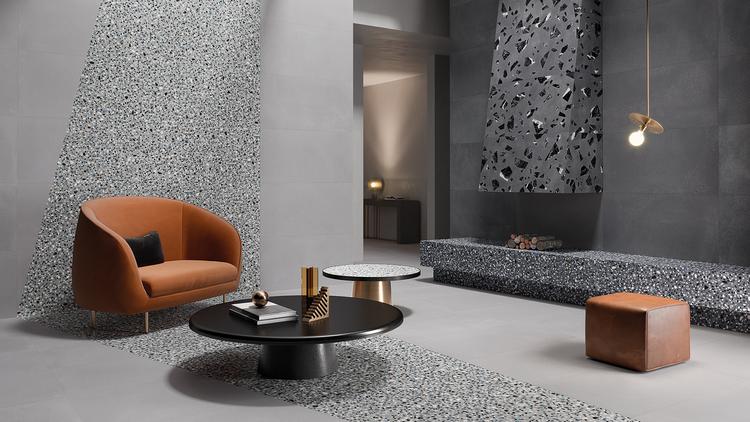
The use of porcelain tiles with natural effects, such as those replicating stone, wood, or cement, is a way to introduce the beauty and serenity of nature into the built environment. The absence of surfaces that evoke the naturalness of earth, forests, or mountains can make spaces feel more impersonal and colder, reducing comfort and increasing the sense of alienation.
To further explore how to integrate these principles through innovative materials inspired by the natural world, visit the Emilgroup website and be inspired.




Any Questions?
If you are looking for the ideal covering for your home or business or you have any questions about our collections, don’t hesitate to get in touch! Together we’ll find your perfect bespoke solution!
If you are looking for the ideal covering for your home or business or you have any questions about our collections, don’t hesitate to get in touch! Together we’ll find your perfect bespoke solution!
Enter the Emilgroup world!
Stay up to date with the latest news from the world of ceramics. Find out about our new collections, events and innovative applications of porcelain stoneware.