Country style homes: a guide to warm, rustic and timeless interiors
21 agosto 2026
For those who love the feeling of the countryside but live in the city, country style brings warmth, comfort and a closer connection to nature into the home.
In this article we explore the key features of this style and how to introduce it into residential spaces without making it feel artificial, enhancing materials, colors, surfaces and details in a coherent way.
What is a country style home?
A country style home is a warm, rustic and timeless interior inspired by rural life. It combines natural materials, soft colors, tactile surfaces and homely details to create spaces that feel authentic, welcoming and gathered gradually over time.
The style has its roots in the traditional rural house, where rooms were furnished with what was available locally and passed down through generations. That heritage explains its core traits: comfortable proportions, colors drawn from the surrounding landscape, and surfaces with a strong tactile character.
Wood, stone, terracotta, linen, wicker, iron and handcrafted ceramics are among the textures that best express this style. They can be used on surfaces, furniture and decorative details to strengthen the character of the home.
Country style vs farmhouse: what's the difference?
Although they may look similar, country style and farmhouse style translate into home design differently. Country style is warmer, more layered and more decorative. Farmhouse style tends to be more neutral, clean and functional.
| Elements | Country style | Farmhouse style |
|---|---|---|
| Palette and patterns | Richer, earthier colors such as sage green, ochre, rust and warm brown; floral patterns, checks, stripes and toile | Brighter, more neutral tones such as white, cream, beige and pale woods; discreet patterns and simple lines |
| Mood | Decorative, nostalgic and layered, with a collected-over-time feel | Essential, practical and ordered; modern farmhouse favors clean lines and contemporary finishes |
| Materials and finishes | Aged wood, stone, terracotta, natural fabrics, vintage furniture and irregular surfaces | Wood, stone, exposed beams, shiplap, comfortable solid furniture, with a controlled styling approach |
Key elements of country style decor
Designing a country style home is not just about adding a few rustic details. It means creating a coherent language through materials, colors, surfaces, fabrics, and accessories, so that each room feels warm, authentic, and harmonious.
Natural, tactile materials
The materials best suited to country style interiors have a natural finish and create a warm, tactile feeling. They can be raw natural materials or ceramic surfaces that reinterpret their textures, shades and visual depth.
Some of the most common elements include:
- Wood: ideal for creating welcoming, enveloping and homely spaces.
- Stone: suitable for floors, wall coverings and architectural details with a mineral character.
- Terracotta: closely linked to the imagery of country homes, with warm tones and a handcrafted effect.
- Linen, cotton and wool: natural, versatile and refined fabrics, perfect for curtains, cushions and upholstery.
- Wicker and woven fibers: suitable for seating, baskets, lamps and decorative accessories.
Warm, earthy color palettes
Color plays an equally important role. Country style palettes should never feel cold or overly uniform; they should evoke soil, wood, stone, clay, leaves and natural fabrics. The base can be neutral and bright, then enriched with warm tones or deeper accents.
Some of the most suitable palettes include:
- Warm whites, cream, beige and taupe: a soft, bright and neutral base.
- Sage green, olive and moss green: ideal for recalling the natural landscape and creating a relaxed atmosphere.
- Ochre, mustard and muted yellow: useful for adding warmth without making the room feel too bright.
- Terracotta, rust, clay and burnt orange: tones connected to earth, fired clay and handcrafted surfaces.
- Warm brown, walnut, oak and caramel: colors that recall wood and reinforce domestic comfort.
- Dusty blue, muted red and burgundy: deeper accent colors, to be used with balance to add character and personality.
Lived-in textures and vintage character
Textured surfaces and vintage elements help create the feeling of a home shaped gradually. In country style interiors, rooms should not look too perfect or impersonal, but layered, authentic and rich in detail.
Slightly irregular surfaces, brushed woods, aged finishes and handcrafted ceramics all reinforce the character of a space. Mixing new furniture with vintage or repurposed pieces adds a more personal touch.
You can use patterns too, but with balance. Florals, stripes and small decorative motifs work well when they interact with the rest of the room without overpowering it.
Country style variations
Country style can take on different nuances depending on geography, level of decoration, and the relationship between tradition and contemporary design. Some of the most common interpretations include French country style, Modern country style and Classic American country.
French country style
French country style is a more elegant, decorative interpretation of country interiors, combining rural elements with refined details so rooms feel rustic yet polished. Aged finishes, toile and floral fabrics, wrought iron, gilded mirrors and stone-effect surfaces add a romantic note while keeping the connection to natural materials.
This style is ideal for kitchens, dining rooms, bedrooms, and bathrooms where the goal is to balance rusticity, softness, and refinement.
Modern country style
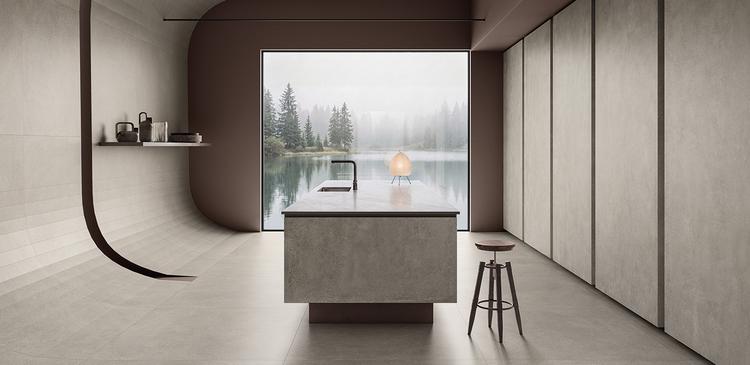
Modern country style is the most essential interpretation: it keeps the natural materials, textures and warm colors of country interiors while reducing heavy decoration, bulky furniture and dominant patterns. Balanced neutral palettes, lighter or washed woods and cleaner lines make it well suited to contemporary homes and city apartments.
Classic American country
Classic American country is the interpretation closest to the traditional image of the country home: comfortable rooms, durable materials, solid furniture and a family-oriented atmosphere. Wood, check or plaid patterns and nature-inspired colors recur throughout, while balancing tradition with contemporary living keeps the look timeless rather than staged.
Rustic tile floor ideas for a country style home
In country style homes, flooring plays a central role. It is not just a functional surface, but one of the elements that immediately defines the character of the space. To achieve a coherent result, it is better to choose surfaces inspired by wood, terracotta, stone or brick, avoiding finishes that feel too glossy, cold or uniform.
Wood-effect tiles are ideal for recreating the warmth of parquet with a more practical solution for kitchens, bathrooms, entryways and high-traffic areas. They bring a domestic, traditional atmosphere while offering greater versatility.
W-Circles interprets the material depth and visual strength of wood through the pattern of tree rings. Shades such as Oak, Walnut and Wengè help create welcoming, tactile and visually rich interiors.
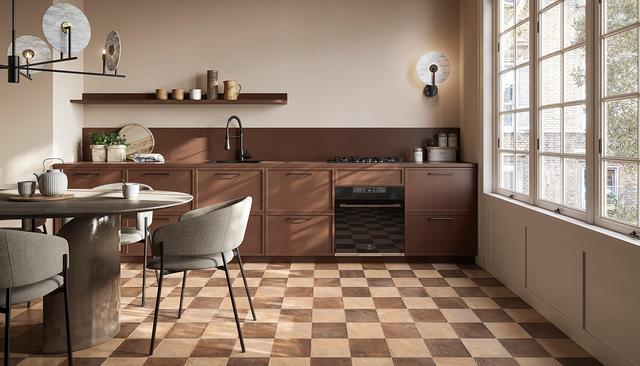
Terracotta effect surfaces recall rural homes, traditional kitchens, entryways, porches and spaces with a Mediterranean or French country sensation. Earthy tones, subtle visual irregularities and a handcrafted effect help create a warm, relaxed surface that is consistent with the imagery of the country home.
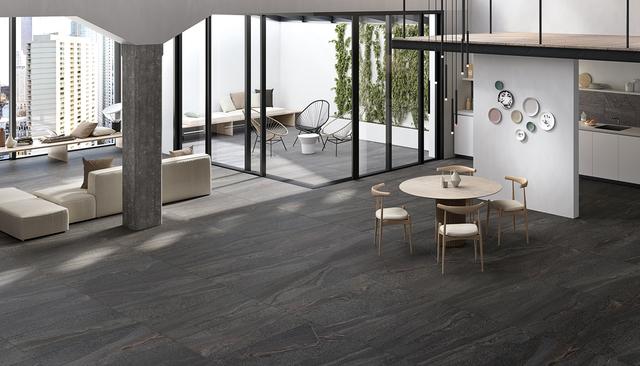
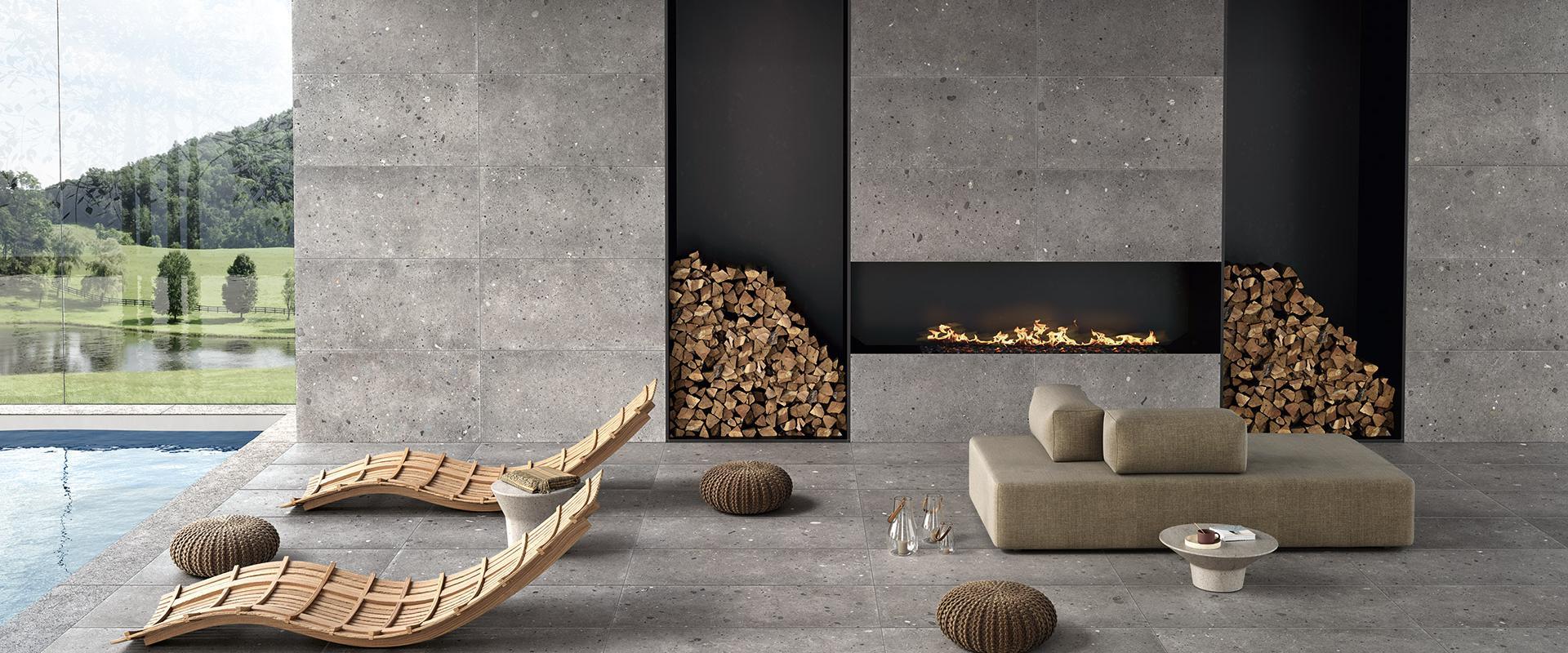
Stone-effect surfaces are an effective choice for a more rustic, natural and timeless country style. They work well in living rooms, kitchens, bathrooms, mudrooms, porches and outdoor spaces, as they recall the solidity of stone and add depth to the surface.
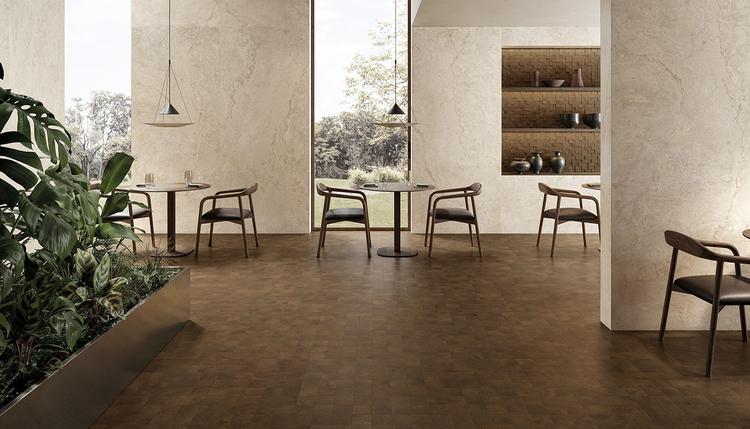
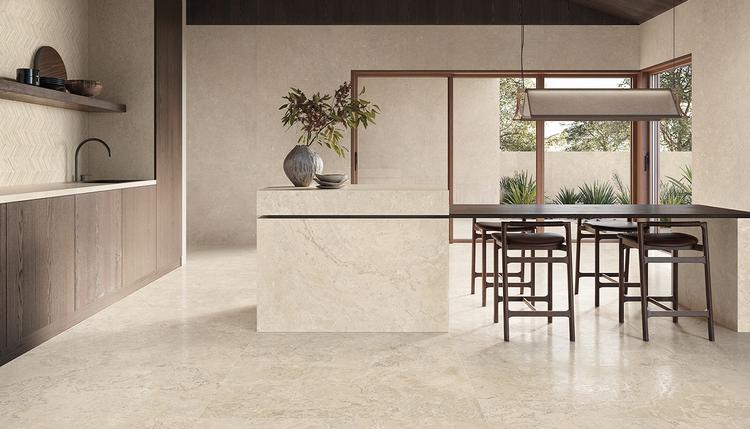
Inspired by Breccia Sarda, Pietra di Orosei can enhance country interiors with a mineral and sophisticated character. It creates a surface rich in shades and stratifications, suitable for those looking for an intense yet elegant stone effect.
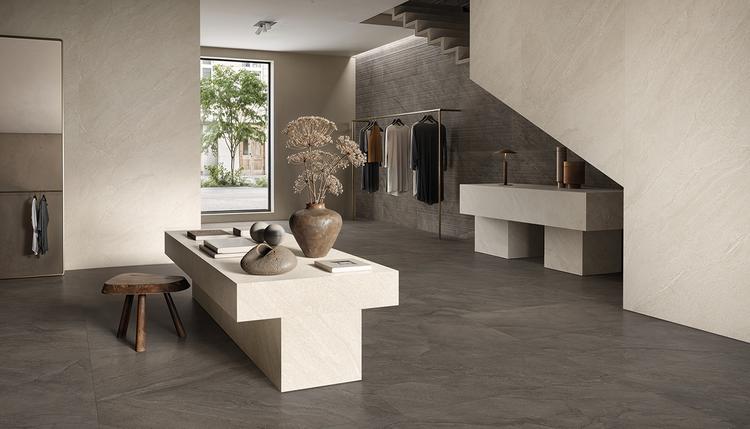
Unique Bourg interprets stone effect in a more neutral and contemporary way. Its two versions, Variée and Minimal, make it possible to choose between a more dynamic look and a more understated one, making it suitable for modern country interiors that feel balanced, bright and refined.
Brick-effect tiles are useful for adding character to smaller surfaces, entryways, backsplashes, mudrooms, porches or decorative walls. The brick effect enhances irregular surfaces and small formats, helping to create a more informal and lived-in atmosphere.
Laying patterns are also important for achieving the right country style effect.
- Herringbone is suitable for a more elegant country look, close to French country or Classic American country. It adds movement, recalls traditional flooring and enhances wood-effect formats in particular.
- Running bond is one of the simplest and most natural layouts for a rustic effect. It works well with wood-effect planks, brick-effect, stone-effect and terracotta-effect surfaces. It is an informal layout, suitable for country homes, kitchens, corridors, mudrooms and porches.
- Mixed sizes create a less regular and more collected-over-time surface. This solution is particularly effective when the goal is to avoid an overly modern or geometric result, adding depth and naturalness to the floor.
Porches and outdoor spaces
The porch is a transition area between indoors and outdoors. It is not just an entrance, but also a space to live in. To make it consistent with a country style home, materials, colors and surfaces should be chosen in continuity with the interiors. Wooden or wicker seating, potted plants, lanterns, outdoor textiles and terracotta planters help create a welcoming, natural and relaxed atmosphere.
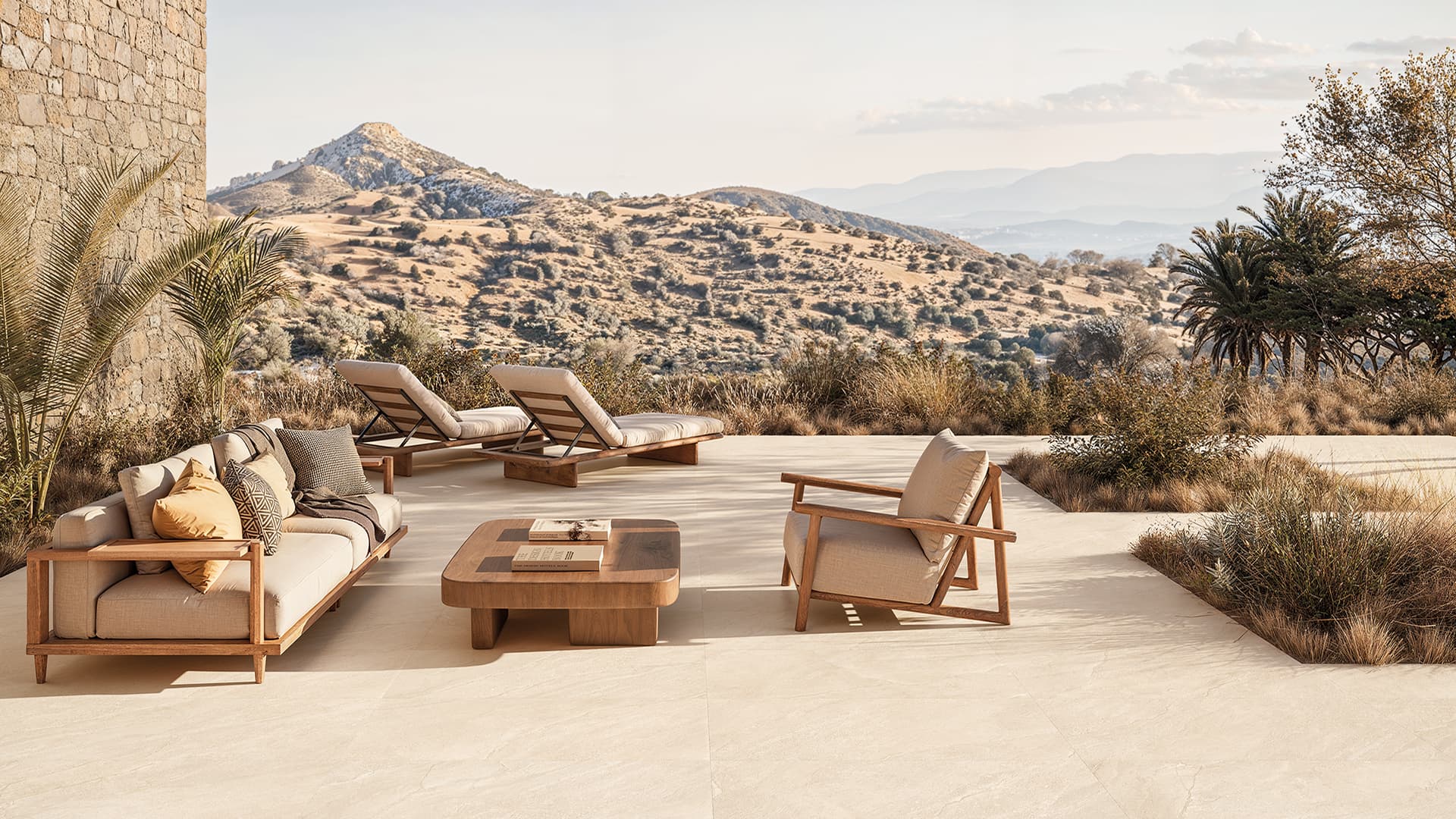
Flooring is very important also for porches, terraces, and outdoor areas. Stone-effect surfaces are the most coherent choices for country style, because they work well with gardens, facades, walkways, and nature-inspired materials.
The aim is to create a natural transition between inside and outside. A country's kitchen can connect with a porch in warm mineral tones; a textured living room can open onto a stone-effect patio, while a rustic entryway can continue outdoors through surfaces coordinated by color, texture and style.
FAQ
What is the difference between country and farmhouse style?
Country style is warmer, more decorative and more layered. It uses earthy colors, patterns, lived-in textures, and details that feel collected over time. Farmhouse style is more essential, clean and functional, with simple lines and light palettes.
What colors are used in country style decor?
Country style decor mainly uses warm, natural colors inspired by the landscape. The most suitable tones include cream, beige, taupe, sage green, olive, ochre, terracotta, rust, clay, warm brown, oak, and walnut. Accents such as dusty blue, muted red or burgundy can add depth without weighing down the room.
What's the difference between country and rustic style?
Rustic style focuses on raw, natural materials, such as aged wood, stone, irregular surfaces, and imperfect finishes. Country style includes these elements but combines them with a more decorative and domestic aesthetic, made of warm colors, natural fabrics, patterns, vintage furniture and well-coordinated details.
Collections used in the project

Related Articles

Any Questions?
If you are looking for the ideal covering for your home or business or you have any questions about our collections, don’t hesitate to get in touch! Together we’ll find your perfect bespoke solution!
If you are looking for the ideal covering for your home or business or you have any questions about our collections, don’t hesitate to get in touch! Together we’ll find your perfect bespoke solution!
Enter the Emilgroup world!
Stay up to date with the latest news from the world of ceramics. Find out about our new collections, events and innovative applications of porcelain stoneware.