What is eclectic style? A designer's guide to mixing patterns, textures and materials
06 luglio 2026
Eclectic interior design is the art of combining furniture, patterns, textures and materials from different eras and styles into a single, cohesive space. So what is eclectic style, exactly? At its core, it is a design philosophy built on intentional contrast, where a well-designed interior does not start with plain colours and smooth surfaces, but with a creative mix of references held together by a clear visual logic.
Porcelain stoneware fits naturally into this balance between bold expression and design coherence, combining aesthetic appeal, versatility and functionality. In this article, we will look at what the eclectic style is, what its characteristics are, and how to recreate it through surfaces with different textural effects, carefully curated color palettes and combinations that only appear random at first glance.
This is precisely the strength of eclectic interior design: creating original, harmonious spaces with a strong sense of personality.
Eclectic style meaning: from 19th-century architecture to modern interiors
Many styles have been overtaken by new architectural and decorative movements over time, but eclecticism remains a fascinating example of continuity and reinterpretation.
Eclectic style emerged between the 19th and 20th centuries as an architectural approach based on combining different historical styles to create something new. The movement, known as Eclecticism in architecture, selected furniture, structural elements, decorative motifs and historical ornaments, including those inspired by different cultures, and combined them according to the coherence of the project and its overall aesthetic value.
But what does “eclectic” really mean? It was used to describe architects and designers who blended different stylistic references when creating buildings. The goal wasn’t to nostalgically recreate the past, but to shape an original language distinct from mere design revival.
Applicable to contemporary interiors, the eclectic style maintains this same logic: bringing together elements that seem disparate to create a unique space. The result can be controversial, as not everyone likes the blending of different eras, colors, and materials, but it is precisely this compositional freedom that makes eclectic interior design relevant and captivating.
Eclectic vs bohemian, maximalist and mid-century: key differences
Eclectic style is often associated with bohemian, maximalist and mid-century modern interiors. These styles may all include bold colours, distinctive furniture, patterns and decorative details, but they follow different design principles.
Eclectic interior design is not defined by a single, easily recognizable aesthetic. Rather, it is a way of arranging a space by combining influences, eras, textures, and materials in a deliberate and harmonious manner.
| Style | Characteristics | Difference from eclectic style |
|---|---|---|
| Eclectic | A mix of periods, colours, patterns, textures and materials. | It does not follow one fixed aesthetic: it creates balance through a common thread. |
| Bohemian | Warm, relaxed and lived-in, with textiles, natural fibres, plants and handcrafted objects. | More informal and decorative mood. |
| Maximalist | Intense colours, layered patterns, many objects and strong visual impact. | Focuses on abundance; eclectic style can also be more restrained. |
| Mid-century modern | Clean lines, organic shapes, wood tones and functional furniture from the mid-20th century. | A specific historical style; in eclectic interiors, it can be just one element within the mix. |
To stand apart from these other styles, eclectic interiors need a strong element of visual balance: a palette, a texture, or a material capable of giving structure to the mix. Floors and wall coverings can play this role particularly well, helping different styles, surfaces and decorative details coexist within the same space.
What does eclectic style look like? The 5 visual signatures
Eclectic style is recognizable by its mix of different elements, but that mix is never random. Patterns, textures, colors, furniture, and materials need to interact through a clear design logic.
- Intentional pattern mixing
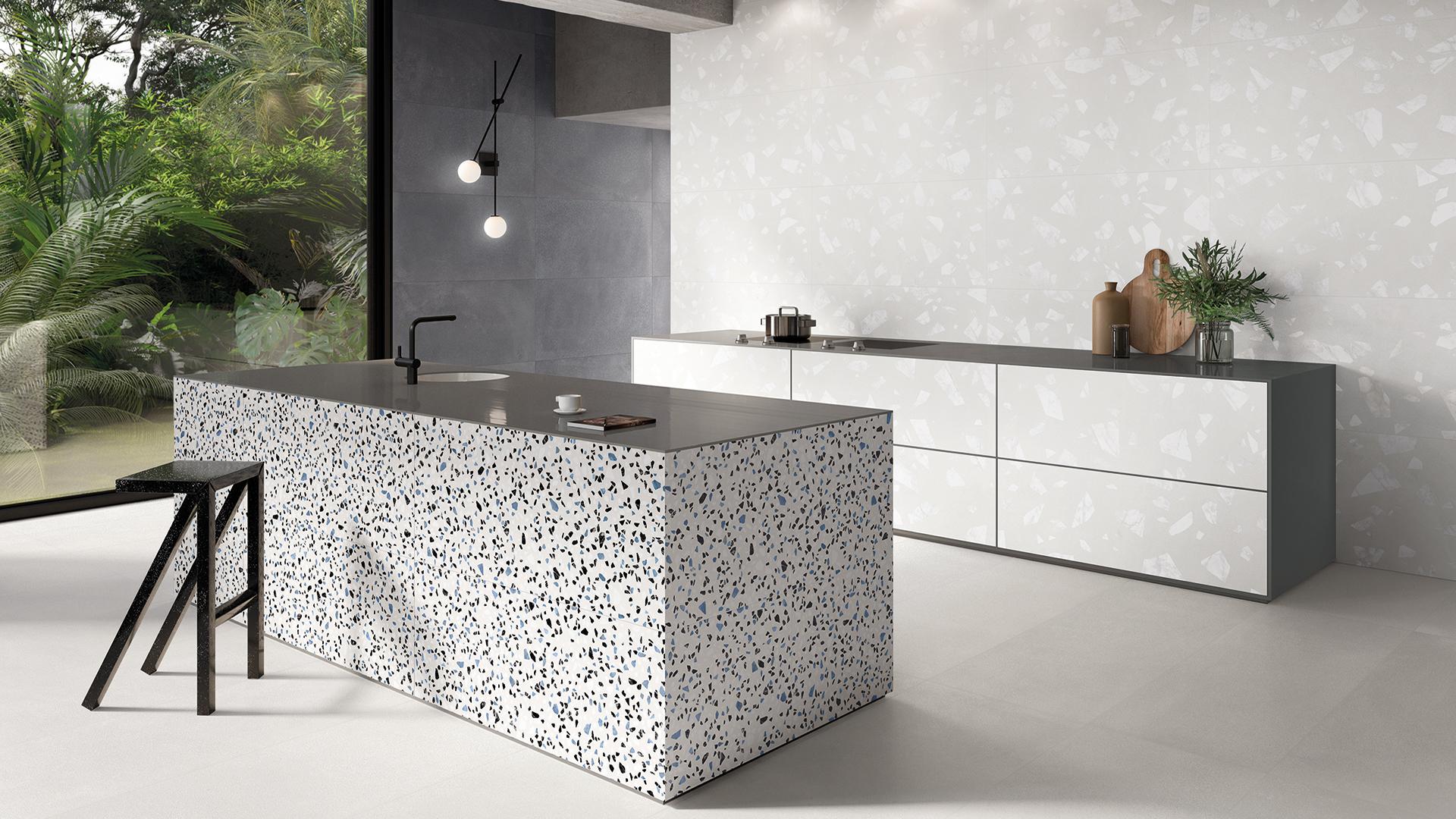
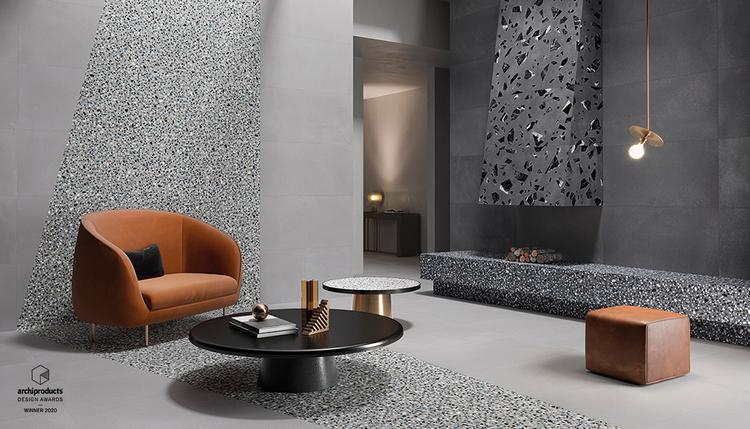
Pattern mixing is not limited to fabrics and wallpaper: it can also involve floors and decorative wall coverings. With the Medley collection, made up of different surfaces and graphic designs in versions such as Classic, Rock and Pop, it is possible to create eclectic yet controlled combinations.
- Layered textures
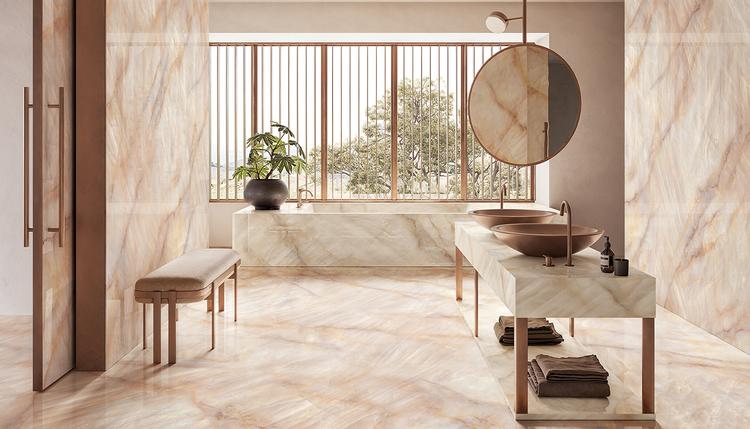
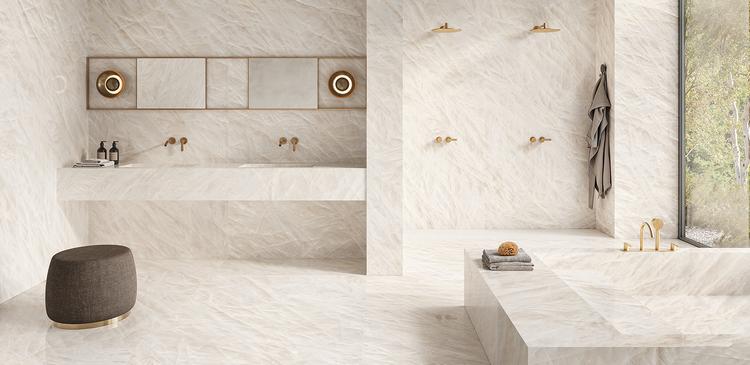
Textures add depth and make a space feel more personal. Matte and glossy, smooth, and tactile surfaces can coexist within the same room. Tele di Marmo Crystal enhances this effect through veining, reflections, transparency, and light effects.
- Cross-era furniture
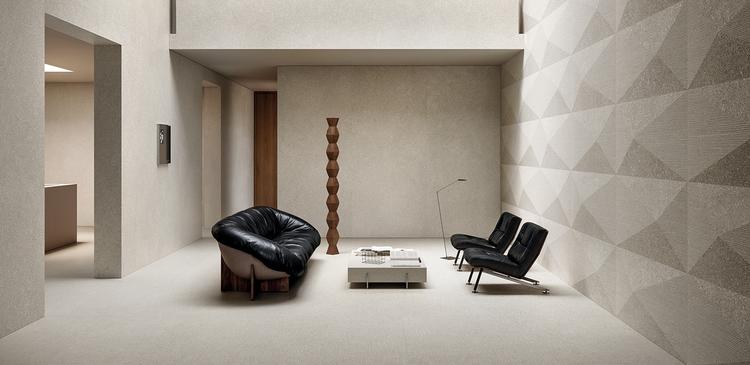
Eclectic interior design combines furniture and references from different periods without trying to make everything match perfectly. The dialogue between vintage, contemporary, and decorative pieces can be balanced by floors and wall coverings, which give the home visual continuity.
- A unifying color thread
Even an eclectic space needs color logic. A palette echoed in textiles, decorative details, wall coverings or flooring helps avoid a chaotic effect and connects different elements within the room.
- One anchor material that ties the room together
In an eclectic interior, patterns, textures, colours and different periods coexist. Anchor material is essential to bring order to the mix: porcelain stoneware can play this role across floors, walls, backsplashes, large slabs, mosaics and decorative surfaces.
Why porcelain stoneware is the perfect anchor for eclectic interior design
The compositional versatility of eclectic style works only if it is supported by an element of harmony. When patterns, colors, furnishings from different eras, and opposing textures coexist, a base is necessary to provide visual and design continuity. Porcelain stoneware meets this need thanks to the versatility of its surfaces and the ability to maintain material consistency across different spaces and applications.
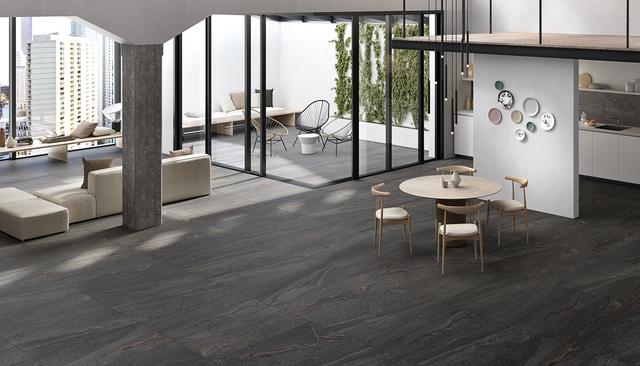
Concrete, stone, marble, resin, wood and terracotta are very different material effects, yet they can all be interpreted through the same surface material. This makes it possible to create combinations with a strong personality without losing balance. Large slabs help create continuous surfaces, reduce the perception of grout lines, and make rooms feel more spacious, ordered, and harmonious.
Porcelain stoneware is also suitable for multiple applications: floors, walls, backsplashes, countertops, large slabs, mosaics, and decorative surfaces. It can be used indoors and outdoors, ensuring indoor-outdoor continuity and high technical performance in terms of resistance, practicality and durability.
Eclectic home decor room by room: kitchen, bathroom, outdoor
Eclectic home decor is about translating this design philosophy into everyday rooms, making the kitchen, bathroom, living room and outdoor areas feel distinct yet connected. Porcelain stoneware fits naturally into an eclectic design project, because it makes it possible to work with different material effects, colours and finishes in every room of the home. Each space can have its own identity while maintaining a shared language through the surfaces.
How to style an eclectic kitchen: wood-look floors, pattern walls, stone-effect tops
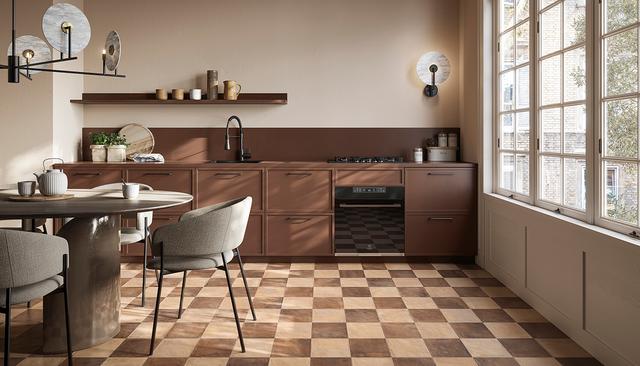
Wondering how to style an eclectic kitchen without it feeling chaotic? The answer lies in three balanced layers. Start with a wood-effect floor as the warm, grounding base. Add a more graphic wall covering, cementine-style decors or a textured backsplash, for visual contrast. Finish with a large-format stone- or marble-effect countertop that anchors the composition.
The idea is to create a dynamic yet cohesive space where materials, colors, and textures are in balance. Porcelain stoneware allows you to combine different textural effects while maintaining durability, practicality, and design continuity, essential qualities for the most lived-in room of the home.
Eclectic living room ideas
In the living room, floors and wall coverings can become true compositional tools. They do more than act as a backdrop: they define areas, create contrasts, and give rhythm to space.
- Porcelain stoneware tiles as a “rug” under the sofa
A decorative portion of flooring can define the relaxation area and create a carpet-effect tile inset, without the need for a textile rug. - Wood look and decorative cementine-style tiles
A wood-look floor creates a warm, natural base, while cementine-style tiles introduce a more graphic note in the conversation area. - Large marble-effect slab and wood-look flooring
A large marble-effect slab wall can become the focal point of the living room. Wood-look flooring balances the scenic effect with a warmer, more welcoming perception. - Contrast between matte and glossy surfaces
A matte/glossy mix in wall coverings, for example on walls, niches or vertical details, adds depth without overloading the space.
The Medley collection by Ergon, with concrete surfaces and Venetian terrazzo-effect versions, lends itself to bold graphic and color combinations.
Eclectic bathroom style
The bathroom is one of the best spaces for experimentation. The contrast between small formats, mosaics and large slabs can create striking compositions, especially in the shower, around the washbasin or on feature walls.
Tele di Marmo Crystal by Emilceramica brings a brighter, more sophisticated effect, thanks to veining, transparency, reflections, and crystal-inspired visual depth. In this way, the bathroom becomes decorative while remaining balanced.
Eclectic outdoor spaces
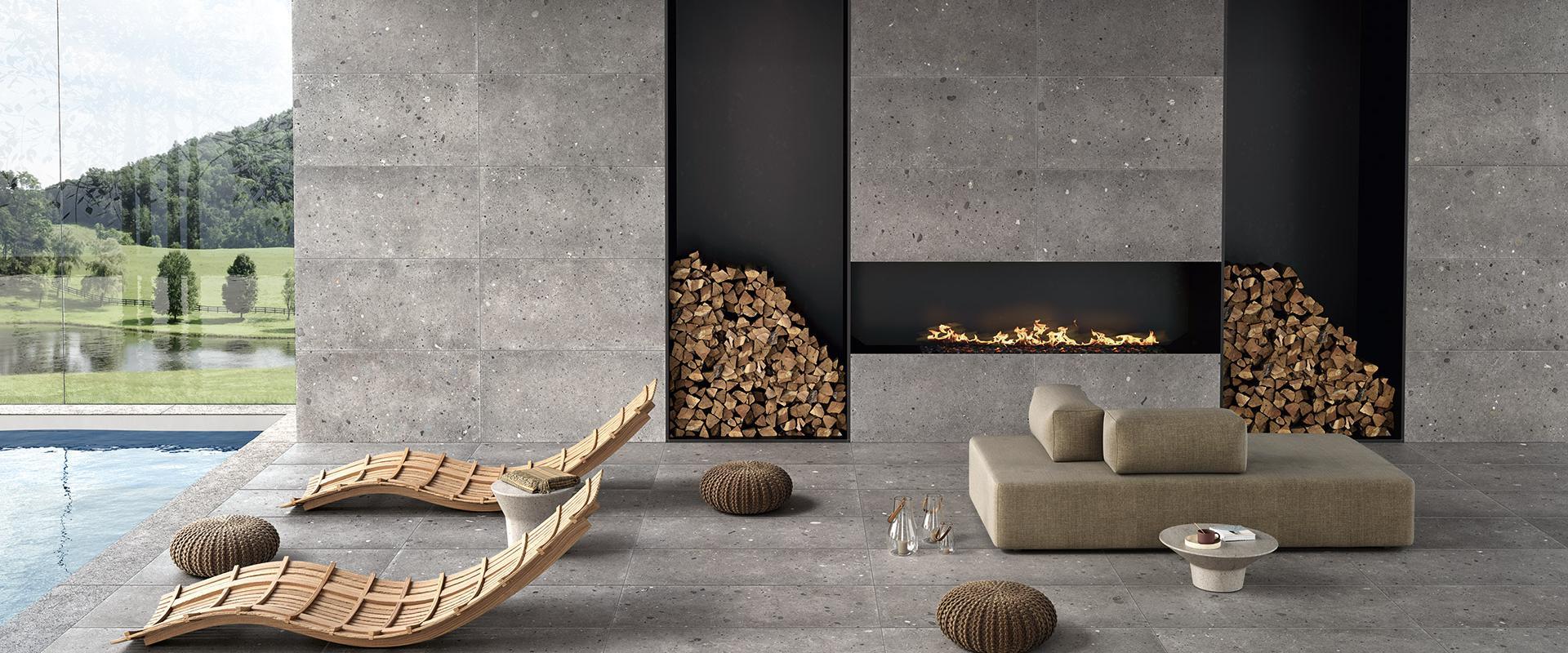
Outdoors, eclectic interior design works best when it maintains a clear connection with the indoor areas. Using the same material effect in a different finish helps create continuity between the home, terrace, patio, or garden.
Furniture, textiles, and decorative details can then introduce color, contrast, and personality, while the surface maintains visual coherence and technical performance suited to outdoor spaces.
Frequently asked questions about eclectic style
What is the meaning of eclectic style?
Eclectic style brings different styles, periods, colours, textures and materials into the same space while maintaining balance and visual harmony. Unlike a single defined aesthetic, it relies on a clear common thread, usually a unifying palette, material or texture, to keep diverse references coherent and intentional rather than chaotic.
Is eclectic style still in trend?
Yes, eclectic style is still on trend because it responds to the growing desire for interiors that feel more personal, layered and lived-in. The modern eclectic style in particular, built around large-format surfaces, refined material mixes and curated palettes, is one of the most relevant interior design directions of recent years.
How is eclectic different from bohemian or maximalist?
Eclectic style is not defined by a specific mood. It can include bohemian or maximalist elements, but its goal is to create a curated, coherent and refined mix. Bohemian is more informal and textile-driven, while maximalism leans into abundance, eclectic style can be either restrained or generous, but always intentional.
Collections used in the project


Related Articles


Any Questions?
If you are looking for the ideal covering for your home or business or you have any questions about our collections, don’t hesitate to get in touch! Together we’ll find your perfect bespoke solution!
If you are looking for the ideal covering for your home or business or you have any questions about our collections, don’t hesitate to get in touch! Together we’ll find your perfect bespoke solution!
Enter the Emilgroup world!
Stay up to date with the latest news from the world of ceramics. Find out about our new collections, events and innovative applications of porcelain stoneware.