Japandi style: what it is, how it works, and why porcelain tile is the perfect foundation
03 settembre 2024
Japandi style is a minimalist interior design trend that merges Japanese aesthetics with Scandinavian comfort. It produces ordered, natural, and deeply livable spaces through reduced furniture, soft and grounded colors, and tactile materials like wood, stone, ceramic, and linen. Porcelain tile, especially in wood-look and stone-effect finishes, is one of the most effective foundations for a Japandi interior, combining warmth, durability, and visual continuity.
This guide covers what Japandi style means, the 7 rules behind it, color palettes, and how to apply it room by room with the right porcelain tile choices.
What is Japandi Style? Origins and core meaning
Japandi blends Japanese simplicity with Scandinavian comfort. The style did not emerge overnight: its cultural roots trace back to the mid-19th century, when Japan opened to international trade and European designers began absorbing Japanese principles of craftsmanship, material honesty, and spatial restraint.
Two philosophies converge here: the Japanese concept of wabi-sabi, finding beauty in imperfection and transience, and the Scandinavian ideal of lagom, "just the right amount, nothing more." Together, they produce a design language that is minimal without being cold, functional without being clinical.
Japandi vs. Wabi-Sabi vs. Hygge: key differences
These three concepts are often confused, but they answer different questions: Japandi is a design style, wabi-sabi is an aesthetic philosophy, and hygge is an emotional concept.
- Japandi is built around warm, well-ordered spaces. Every choice, floor, wall, furniture, material, is intentional.
- Wabi-sabi values imperfection, irregularity, and the passage of time: rough textures, handmade objects, surfaces that show wear.
- Hygge is the Danish idea of comfort and the pleasure of everyday moments. A hygge home simply needs to feel warm and welcoming
| Style | Key characteristics | Most suitable materials |
|---|---|---|
| Japandi | Warm minimalism, order, functionality, clean lines | Light wood, wood-look porcelain tile, stone-effect porcelain tile, linen, bamboo, ceramic |
| Wabi-Sabi | Imperfection, asymmetry, material depth, naturalness | Raw wood, stone, clay, terracotta, handcrafted ceramic, raw linen, wood-look porcelain tile |
| Hygge | Comfort, warmth, intimacy, welcoming atmosphere | Light wood, wool, cotton, bouclé, rugs, candles, ceramic, stone-effect or oak-look porcelain tile |
What are the 7 rules of japandi home style?
Japandi home decor isn't about filling a room with beautiful objects: it's about choosing fewer pieces and making sure each one belongs. The result is a space that feels calm, warm, and practical, but never bare.
1. Embrace radical minimalism
Japandi starts with subtraction. A few well-chosen pieces are enough, as long as each has a purpose. The guiding principle is lagom: the right amount, neither too much nor too little.
2. Choose natural materials with tactile depth
Materials are central: wood, stone, linen, cotton, bamboo, rattan, ceramic. Wood-look and stone-effect porcelain tile work especially well, offering the warmth of natural surfaces with easier maintenance, bridging Scandinavian functionality with Japanese material restraint.
3. Build around a calm, neutral color palette
Japandi colors are soft, natural, and deliberately understated. Warm whites, beiges, and natural greys form the base; muted greens, charcoal, and soft black add depth as accents. The rule: no sharp contrasts.
4. Prioritize craftsmanship over decoration
Visual interest comes from material quality and surface finish, not from added objects. This is where high-quality Italian-made porcelain tile plays a key role: realistic textures and refined finishes introduce character without cluttering the space.
5. Keep lines clean and functional
Japandi interiors feature clean lines, low furniture, and simple shapes. Every element should have a clear reason to be there: a space that works well also looks good.
6. Bring nature inside, with discretion
Nature is present but never forced. A few plants, natural fibers, wood-look flooring, or soft daylight are enough. Lighting matters too: maximize natural light, then add warm lamps where needed.
7. Create harmony through negative space
Empty space in Japandi isn't a problem to solve, it's part of the design. Large-format porcelain tiles support this naturally: fewer grout lines, quieter surfaces, more continuous visual flow.
What are the best colors for a japandi interior?
Japandi palettes are warm, muted, and grounded in nature. The goal is visual calm, not visual interest.
| Type | Colors | Function |
|---|---|---|
| Natural base | Warm white, ivory, beige, sand, greige | Creates light, calm, and material continuity |
| Natural tones | Taupe, warm grey, light brown, clay | Adds warmth and depth |
| Deep accents | Muted sage, olive, charcoal, soft black | Adds definition without weight |
Color in a Japandi interior doesn't live only on walls. Light wood-look tiles bring warmth to floors; beige or light grey stone-effect tiles create a soft mineral background for walls and bathrooms; darker tones work well for countertops and details. The key is consistency across surfaces: color should feel like it belongs to the material, not applied on top of it.
Japandi interior design ideas: room by room
Japandi adapts to every room, from living areas to kitchen, bathroom, and bedroom. Here are practical ways to apply it without losing the calm, natural feeling of the style.
Japandi living room: warm floor, quiet walls, zero clutter
A Japandi living room needs a warm, neutral base with low furniture, clean lines, and very few decorative objects. In open-plan homes, this matters even more, because the floor has to visually unify the living area with the kitchen.
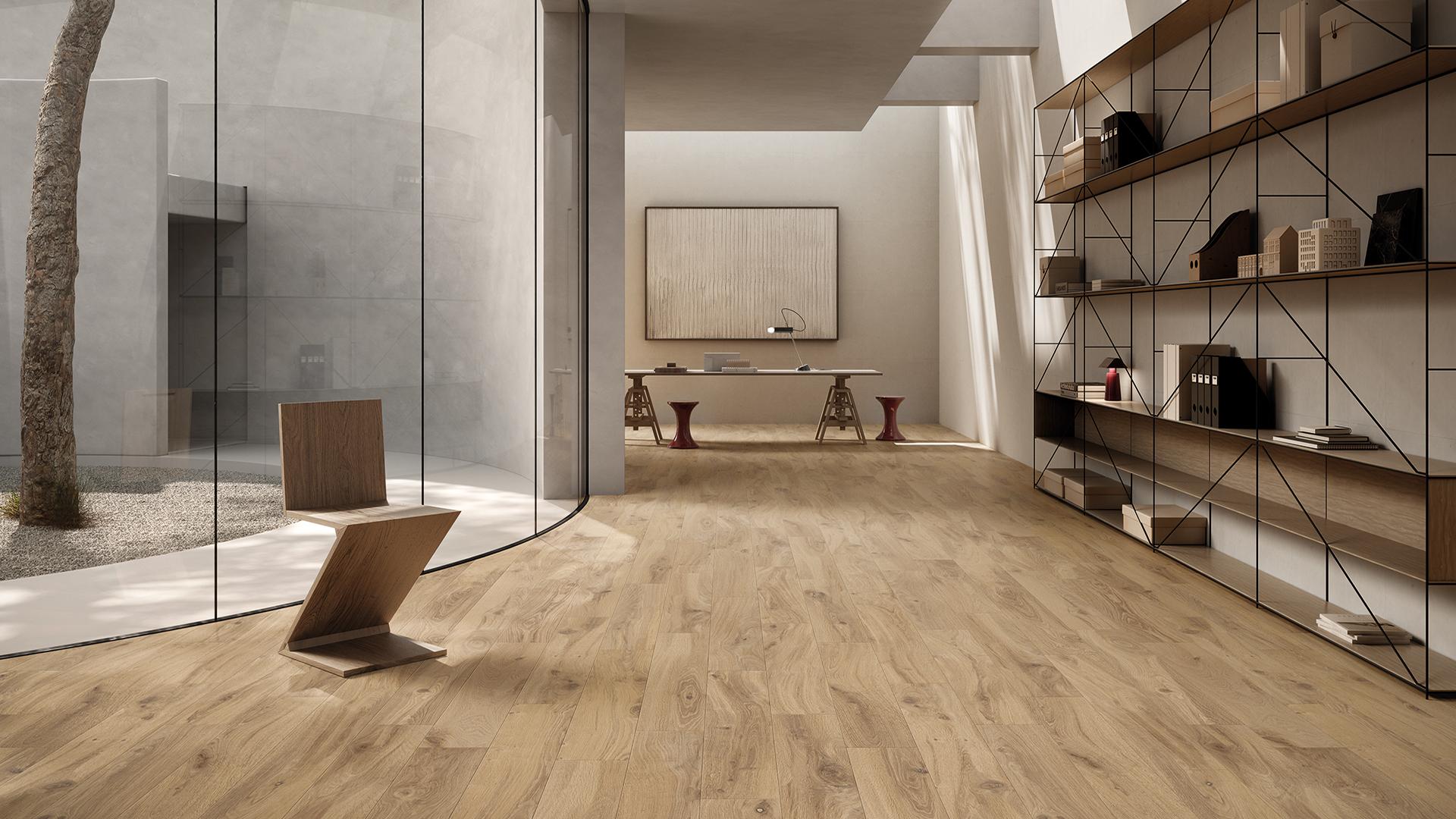
Extra-large wood-look porcelain planks are a strong choice here: they reduce visual interruptions and give the room a warm foundation. The wood effect should feel refined and tactile, never overly decorative.
The I-Wood by Ergon collection by Emilgroup is a good example. Its wood-look porcelain tiles recreate the visual and tactile feel of oak, but on a contemporary surface that is resistant and easy to maintain. The three available colors move from lighter, brighter tones to warmer and more enveloping shades. This makes it easier to adapt the floor to different Japandi living room ideas, from airy and minimal spaces to more intimate interiors.
Japandi kitchen: functional beauty from floor to countertop
A Japandi kitchen should be practical, calm, and easy to use. The floor brings warmth and continuity; the countertop becomes one of the most-used surfaces of daily life.
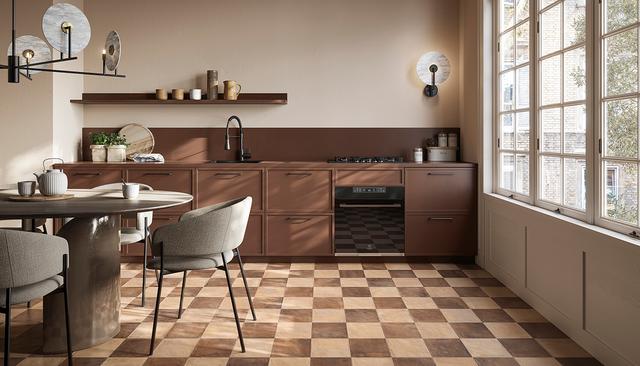
An effective solution is to pair wood-look porcelain tile flooring with a porcelain countertop. The two surfaces speak to each other through color, texture, and material effect, creating a kitchen that feels consistent without looking flat. Large-format porcelain slabs on the countertop offer a continuous, hygienic surface that resists stains and moisture, practical and aligned with the Japandi approach.
Japandi bathroom: stone texture, seamless surfaces, ritual calm
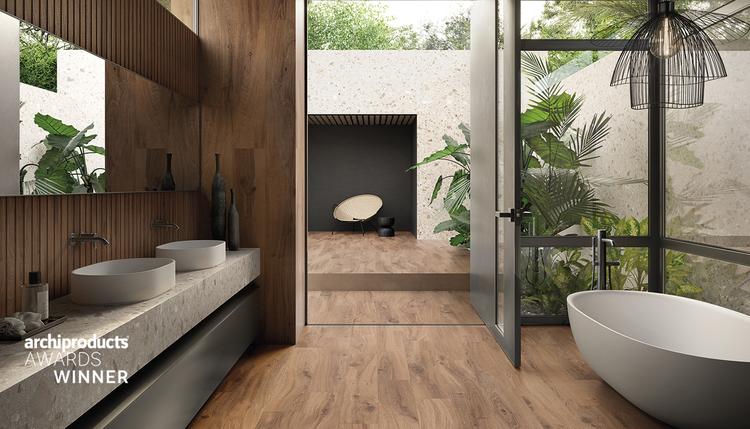
A Japandi bathroom should feel quiet and restorative, almost like a small home spa. Stone-effect porcelain tile is one of the best choices: it brings in a natural, mineral texture without weighing down the space, and creates continuity between floor, walls, and shower area.
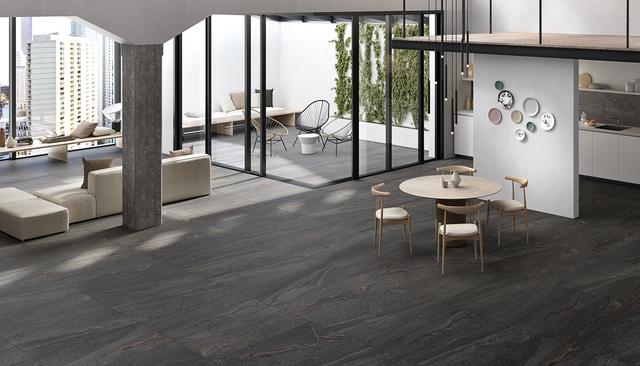
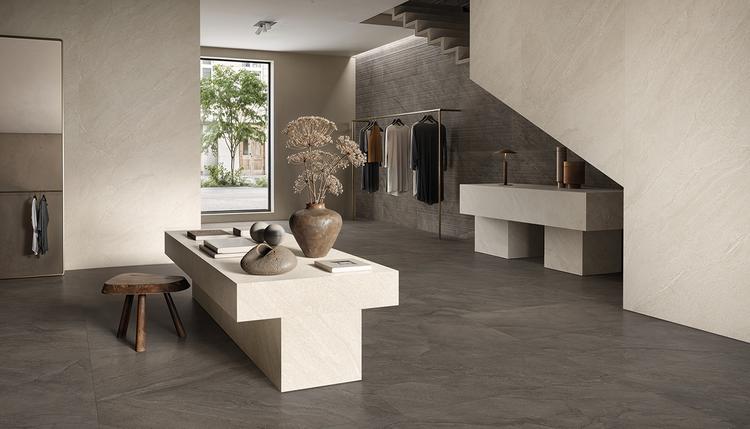
The Pietra di Orosei by Provenza collection by Emilgroup works particularly well here. Inspired by the Sardinian Breccia Sarda, it combines the sophistication of marble with the refinement of stone.
Large slabs make the surfaces feel broader and more ordered, especially in the shower area. At the same time, porcelain tile is practical for the bathroom because it resists humidity, stains, and daily cleaning, while keeping a natural and tactile look.
Japandi bedroom: a floor that disappears into the calm
A Japandi bedroom should be simple by nature. Neutral colors, a few essential pieces, and very little decoration are usually enough.
The palette should stay restrained: a light base of warm white, greige, sand, or soft grey, enriched with small touches of sage green, natural brown, or matte black. A light wood-effect floor makes the room feel warmer without drawing attention, almost disappearing into the calm, becoming a soft base for low furniture, natural textiles, and gentle lighting.
Japandi Style: frequently asked questions
What is the meaning of Japandi?
Japandi comes from the words Japan and Scandinavian. It describes an interior design style that combines Japanese minimalism and wabi-sabi philosophy with Scandinavian functionality and comfort.
What are the key characteristics of Japandi style?
The key characteristics are minimalism, natural materials, a neutral and warm color palette, clean functional lines, high craftsmanship, a discreet connection with nature, and the intentional use of negative space.
What is the difference between Japandi and Scandinavian design?
Japandi adds a more philosophical and contemplative layer to Scandinavian functionality. Compared to Nordic style, it is more material, more restrained, and closer to wabi-sabi, the Japanese idea of finding beauty in imperfection.
Is porcelain tile good for a Japandi interior?
Yes. Porcelain tile combines durability, low maintenance, and a natural look. In large formats, it also helps create the continuous, visually calm surfaces that define the style.
What's the best flooring for a Japandi home?
Light wood-look porcelain tile in the living areas and bedroom, and stone-effect porcelain tile in the bathroom. Large formats are preferable: they reduce grout lines and reinforce visual continuity.
Collections used in the project


Related Articles


Any Questions?
If you are looking for the ideal covering for your home or business or you have any questions about our collections, don’t hesitate to get in touch! Together we’ll find your perfect bespoke solution!
If you are looking for the ideal covering for your home or business or you have any questions about our collections, don’t hesitate to get in touch! Together we’ll find your perfect bespoke solution!
Enter the Emilgroup world!
Stay up to date with the latest news from the world of ceramics. Find out about our new collections, events and innovative applications of porcelain stoneware.