Minimalist interior design: how to build a minimal style home from the floor up
27 ottobre 2026
Minimalism is more than an aesthetic defined by empty spaces. It's a design philosophy rooted in simplicity, balance, and intentional choices. It doesn’t mean eliminating everything from space, but rather carefully selecting what you want to keep, creating order, balance, and visual coherence.
Essential forms, a few well-coordinated materials, restrained color palettes, and a thoughtful use of light make it possible to create sophisticated yet airy spaces, in which every element serves a specific purpose.
When applied to interior design, the minimalist style draws on some of the principles of Minimalism: reduction of elements, compositional clarity, and attention to the relationship between space, material, and function.
What is minimalist interior design?
Minimalist interior design aims to reduce elements to the essentials, favoring simple forms, continuous surfaces, controlled color palettes, and functional furnishings. Every element is chosen with intention, giving each piece a more meaningful role in the space.
Among the influences that foreshadowed certain principles later central to the contemporary minimalist style is the work of Ludwig Mies van der Rohe, in collaboration with Lilly Reich. Designed for the 1929 International Exposition, the Barcelona Pavilion remains one of the most influential examples of modern architecture: defined geometries, fluid space, and a particularly rich use of materials demonstrate how simplicity and materiality can coexist.
Compared to the modern style - which can accommodate more pronounced contrasts, a greater variety of materials, and highly distinctive pieces of furniture - the minimalist approach generally tends toward a more rigorous selection of shades, surfaces, materials, and accessories. Empty space thus becomes part of the composition, while visual order and proportions help reduce visual clutter within the space.
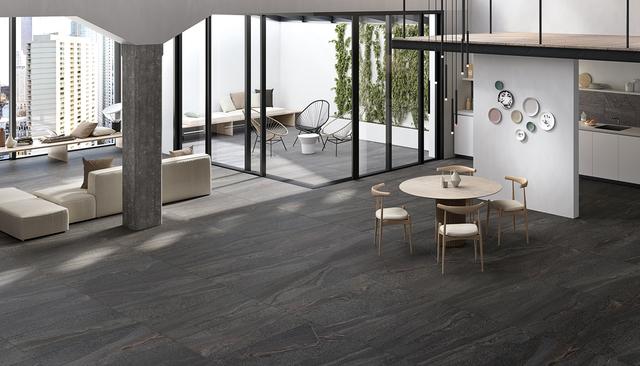
An example of this balance is the Balchug Viewpoint private apartment project, where the goal was to create a relaxing and understated environment without compromising the practical needs of daily life. Emilgroup surfaces help create a cohesive interior, complementing the architecture without overpowering it.
Elements of minimalist design
What elements define a minimalist style? Surfaces, colors, light, and furnishings should be chosen so that they work together without visually competing with one another.
Continuous surfaces, fewer joints
Visual continuity is one of the most effective ways to reduce the fragmentation of space.
Continuous flooring across different rooms, the use of the same material in adjoining areas, seamless transitions between the living room, kitchen, and dining area, and subtle grout lines all contribute to making the space feel like a unified whole.
This doesn’t necessarily mean using a single material everywhere but rather establishing a clear hierarchy while minimizing unnecessary interruptions and variations.
A neutral, low-contrast palette
A neutral palette with subtle contrasts is one of the most common choices in minimalist interiors. This doesn’t mean, however, that you have to limit yourself to white. Ivory, beige, sand, greige, taupe, gray, and brown can create equally minimalist spaces, while accents of black or deeper shades can add character. Even bolder contrasts can work, as long as they’re controlled and don’t clash with one another.
Light as a material
Light is not merely a tool for illuminating spaces; it becomes an integral part of the design. It can shape volumes, highlight textures and reliefs, create depth, and alter the perception of surfaces.
This aspect becomes even more important in minimalist interiors: as the number of decorative elements decreases, shadows, reflections, and variations in texture take on greater significance. Natural light, ambient or indirect lighting, and functional or accent lighting can also be combined to create different levels of illumination without overwhelming the space.
Furniture that earns its place
Minimalist furniture is a piece chosen for a specific function, characterized by clean lines, balanced proportions, and minimal ornamentation. It is not defined by a single material or color, but by the way it integrates into the space without overwhelming it.
Low-profile furniture, wall-hugging storage units, built-in cabinets, suspended elements, and simple geometric shapes are some of the most common solutions. The guiding principle, however, remains one of selection: a few well-chosen pieces rather than an accumulation of purely decorative accessories.
Warm minimalism: why minimal no longer means cold
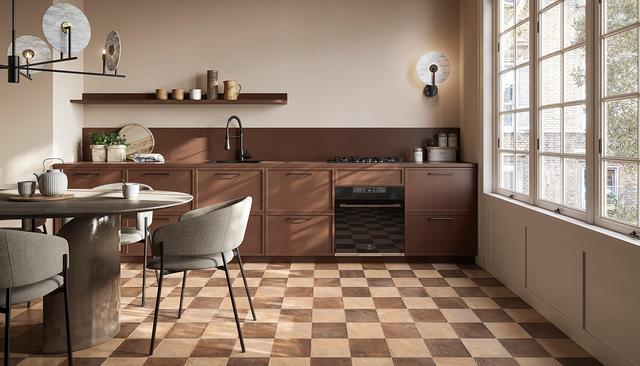
One of the leading contemporary interpretations of the minimalist style is “warm minimalism,” which retains the simplicity of the design language while introducing greater warmth through carefully selected materials, richer textures, natural colors, textile fibers, and textural effects inspired by stone or wood.
The goal remains to reduce the number of elements while enhancing the perceived value of those that are present. In this way, the material itself becomes the decoration.
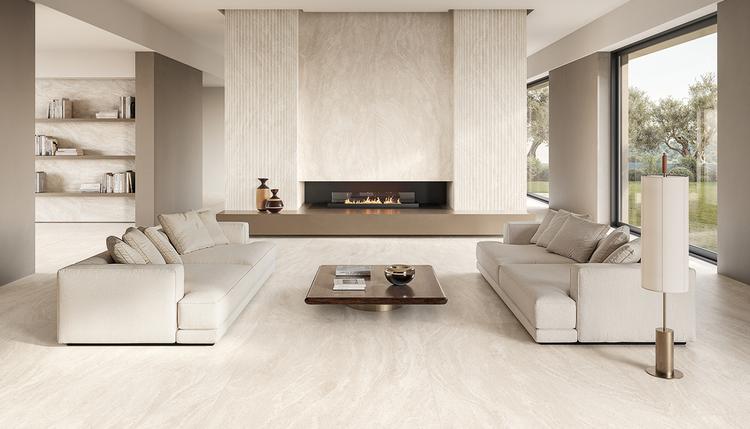
The Dual Travertine collection perfectly embodies this contemporary take on minimalism. Inspired by travertine, it introduces depth, subtle variations, and natural tones that warm the space while maintaining an elegant and refined surface.
Why large format porcelain tile is the foundation of a minimalist home
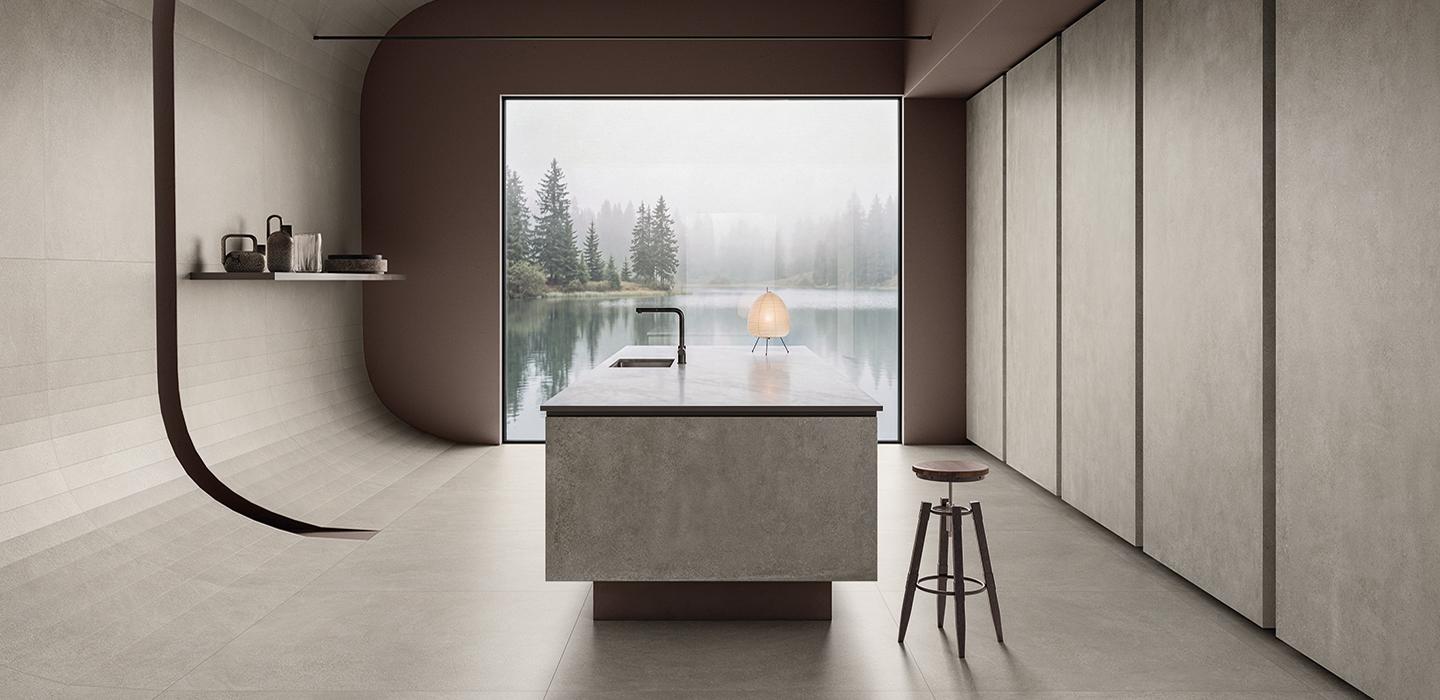
Large-format porcelain tile is particularly well-suited to minimalist interiors because it reduces the number of grout lines and makes floors and walls appear larger, continuous surfaces.
The use of rectified edges and tone-on-tone grout lines also helps minimize their visual impact, contributing to a more uniform space. The same material can be used to connect the floor and wall or applied across multiple interconnected areas, transforming the surface into a true architectural element.
However, the size must be chosen based on the dimensions, proportions, and geometry of the space: a larger slab, in fact, is not automatically the best solution for every space.
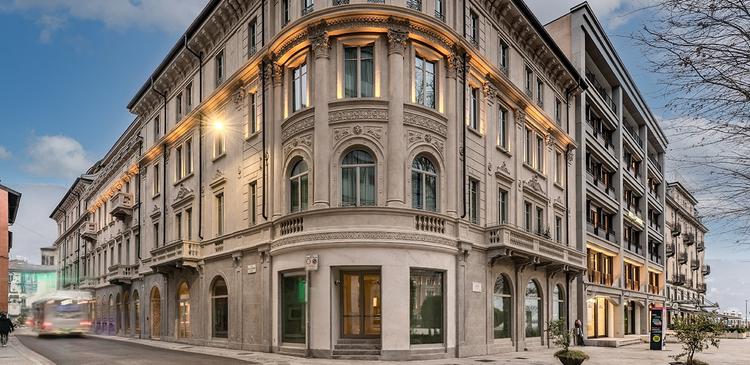
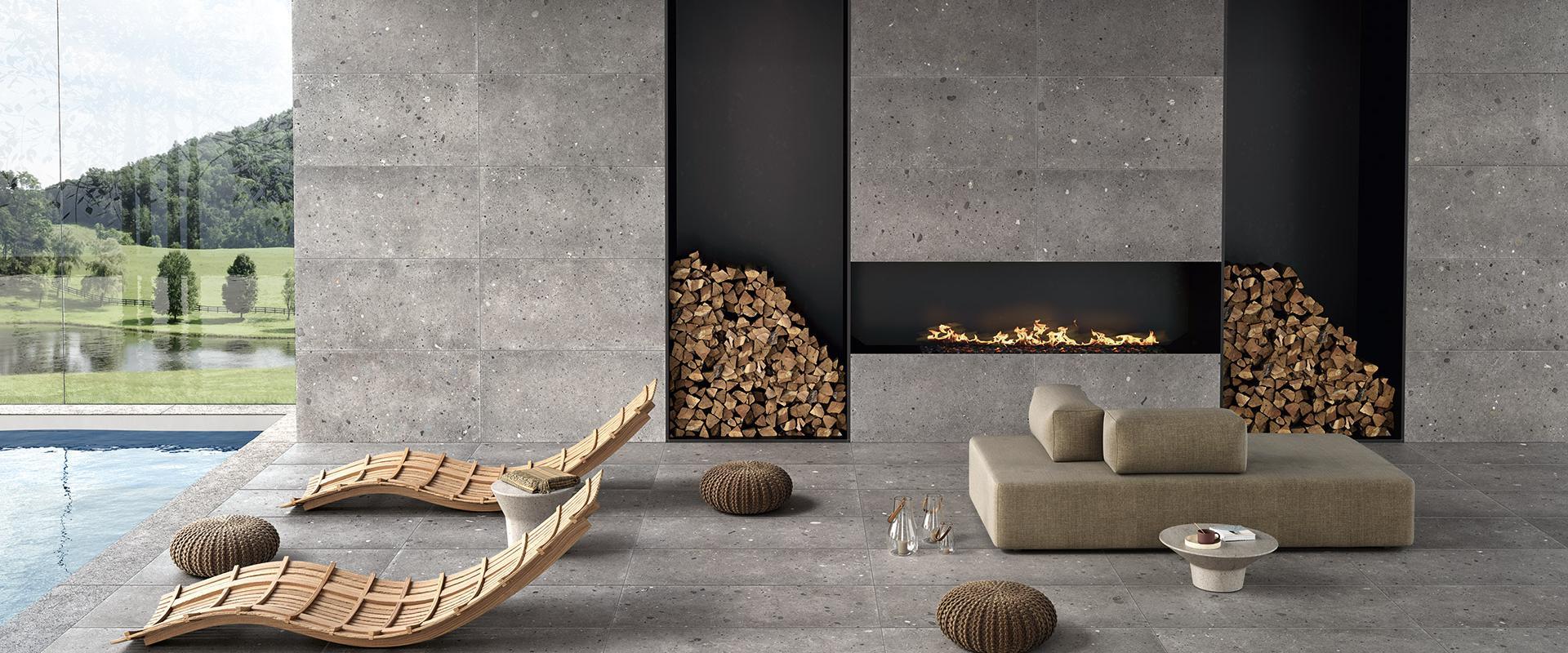
Ergon’s ConceptStone collection reinterprets stone through various surface finishes that can be combined within a single project. This allows for variations in texture while maintaining a consistent and controlled aesthetic, particularly well-suited to minimalist interiors.
How to create a minimalist interior
Creating a minimalist interior starts with knowing what to leave out. The key is to carefully select materials, define a cohesive color palette, and prioritize function, adding only what is truly necessary.
- Subtract before adding: start with the space needs, keep only what serves a specific function, and eliminate superfluous elements.
- Choose a key material and repeat it: using the same surface in different rooms, on niches, or in wall coverings helps reduce the number of competing patterns and materials and enhances visual continuity.
- Limit the color palette to three main shades: this isn’t a universal rule, but a practical guideline. A base shade, a secondary shade, and perhaps an accent of color can help keep the design cohesive.
- Integrate storage into the walls: built-in cabinets, niches, and custom solutions keep objects out of sight and leave more space for the room’s architecture to shine.
- Work with different levels of light: combine natural light, ambient lighting, functional lighting, and subtle accents to shape the space without resorting to an excess of decorative elements.
Minimalist living room ideas
An open-concept space featuring a living area, dining area, and kitchen becomes a fascinating setting in which to apply the principles of minimalism.
A single flooring material can visually connect all the functional areas, while the different zones can be defined through the arrangement of furniture, variations in lighting, rugs, or the orientation of the spaces, without necessarily disrupting the continuity of the space.
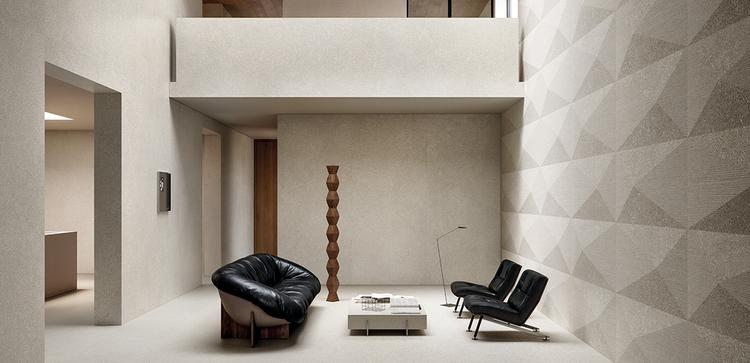
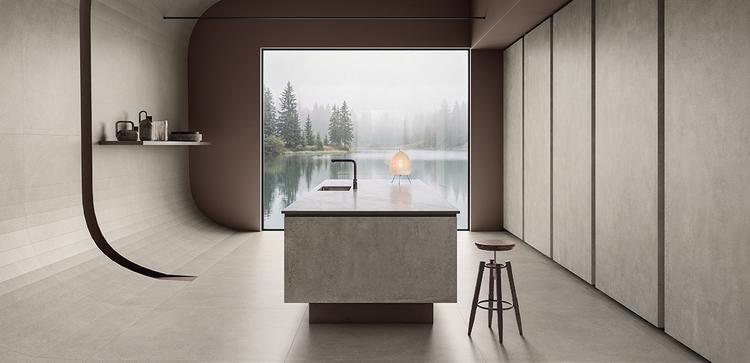
To introduce texture without weighing down the space, Unique Concrete can be used as flooring or wall cladding. In particular, Spazzolato 3D reproduces on the surface the streaks left by brushing the still-soft concrete: used, for example, on a single wall, it can become the space’s primary decorative element. In this way, it is the texture itself that generates visual interest, without the need to multiply colors, materials, or decorations.
Minimalist bedroom ideas
When applied to the bedroom, warm minimalism combines simplicity and comfort through minimal furniture, built-in storage, natural fabrics, warm tones, and soft, indirect lighting.
A low-profile bed and uncluttered surfaces help create a more open, airy feel in the room, while linen, natural fabrics, and materials with light textures prevent the space from feeling overly austere.
Here, Dual Travertine can be used on the wall behind the headboard, transforming it into the room’s central textural focal point. The textured surface becomes the room's focal point, reducing the need to add paintings, wainscoting, or numerous decorative accessories.
Frequently asked questions
What is the best tile for a minimalist home?
There is no one-size-fits-all solution. For example, balanced surfaces that coordinate with the room’s color scheme - and, whenever possible, in large formats to minimize the visual impact of the grout lines - are ideal.
Is minimal traditional the same as minimalist?
No, Minimal Traditional is an American residential architectural style that was particularly popular between the 1930s and the 1950s, whereas contemporary minimalism is a design approach based on simplicity, function, and the reduction of elements.
What are the characteristics of the minimalist style?
Simple shapes, a restrained color palette, seamless surfaces, functional furnishings, and a few decorative elements. The goal is to create a neat and cohesive space - not necessarily an empty one.
What is the difference between minimalist, Scandinavian and Japandi style?
Minimalism focuses on simplicity and visual order; the Scandinavian style adds warmth through light-colored wood and comfort; Japandi combines Scandinavian and Japanese influences, emphasizing natural materials and warm tones.
Should minimalist floor tiles be matte or polished?
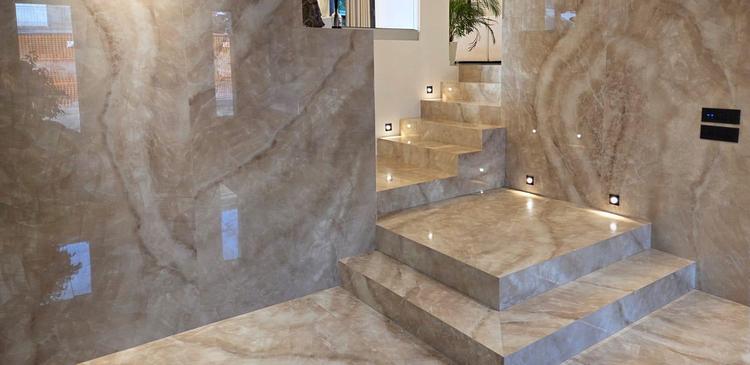
Both can work. A matte finish creates a more natural and understated effect, while a glossy or lapped surface reflects light more and can make the space more visually striking.
Does a minimalist home have to be all white?
No, on the contrary: beige, greige, sand, gray, brown, and darker shades can all be used in minimalist interior. What matters is keeping the color palette limited and consistent.
Collections used in the project




Any Questions?
If you are looking for the ideal covering for your home or business or you have any questions about our collections, don’t hesitate to get in touch! Together we’ll find your perfect bespoke solution!
If you are looking for the ideal covering for your home or business or you have any questions about our collections, don’t hesitate to get in touch! Together we’ll find your perfect bespoke solution!
Enter the Emilgroup world!
Stay up to date with the latest news from the world of ceramics. Find out about our new collections, events and innovative applications of porcelain stoneware.