Mixing materials for industrial style interiors: a guide to modern textures
27 gennaio 2026
The retro charm of industrial style recalls a time when bolts, pipes and raw metal elements dominated functional workspaces.
Today, that same energy is reimagined for contemporary living through authentic textures, bold contrasts and technical details that transform structural necessity into high-end design.
What are the key elements of industrial style design?
Industrial style is defined by exposed architecture, where beams, columns, pipes and cable trays aren’t hidden; they become design features. Materials immediately set the mood:
- Raw materials: exposed brick, concrete and weathered wood create an essential aesthetic.
- The power of imperfection: visible wear and tactile textures add value, building a sophisticated contrast between cool surfaces and organic warmth.
- Open lyouts: generous volumes and functional furnishings pair with technical lighting: think pendants, tracks, and workshop-inspired fixtures.
- Neutral palette: dominated by grey, black, anthracite and sand, often punctuated by metallic accents like bronze and brass to add depth.
How to mix materials in interior design for “Industrial Chic” interiors?
Mixing materials in an industrial chic interior means finding balance between two sides: one made of natural surfaces and signs of time, and one that feels cleaner and more contemporary.
To prevent the space from feeling sterile, it is essential to introduce "warming" elements. When cold greys and metals dominate, the environment can feel flat. The solution? Layer in wood-look surfaces or textiles and utilize strategic lighting to restore visual and emotional equilibrium.
Can you combine porcelain tile with wood in industrial spaces?
Even if they may seem like two distant worlds, porcelain tile and wood are one of the most effective combinations for industrial style, because they bring together performance and warmth. The key is to design the transition between the two materials carefully, both aesthetically and technically.
- Thickness differences: when surfaces aren’t level, the transition can be managed through proper level planning or with a transition profile. This helps prevent unwanted steps, exposed wood edges, and hard-to-finish junctions.
- Different materials react differently to humidity and temperature: wood tends to move more, while porcelain tiles are more stable. If the junction doesn’t allow for expansion gaps, over time you may see micro-cracks, debonding, tenting or warping.
Creating industrial style interiors: porcelain, wood, metal and concrete combinations
A few materials can create bold contrasts and a strong identity. Typically, you start with a textured base and then build the atmosphere with more refined details: porcelain tile and concrete define the backdrop; metal draws the lines, and wood softens the overall feel and makes the space more inviting.
Porcelain tile with wood look: achieving authentic industrial textures
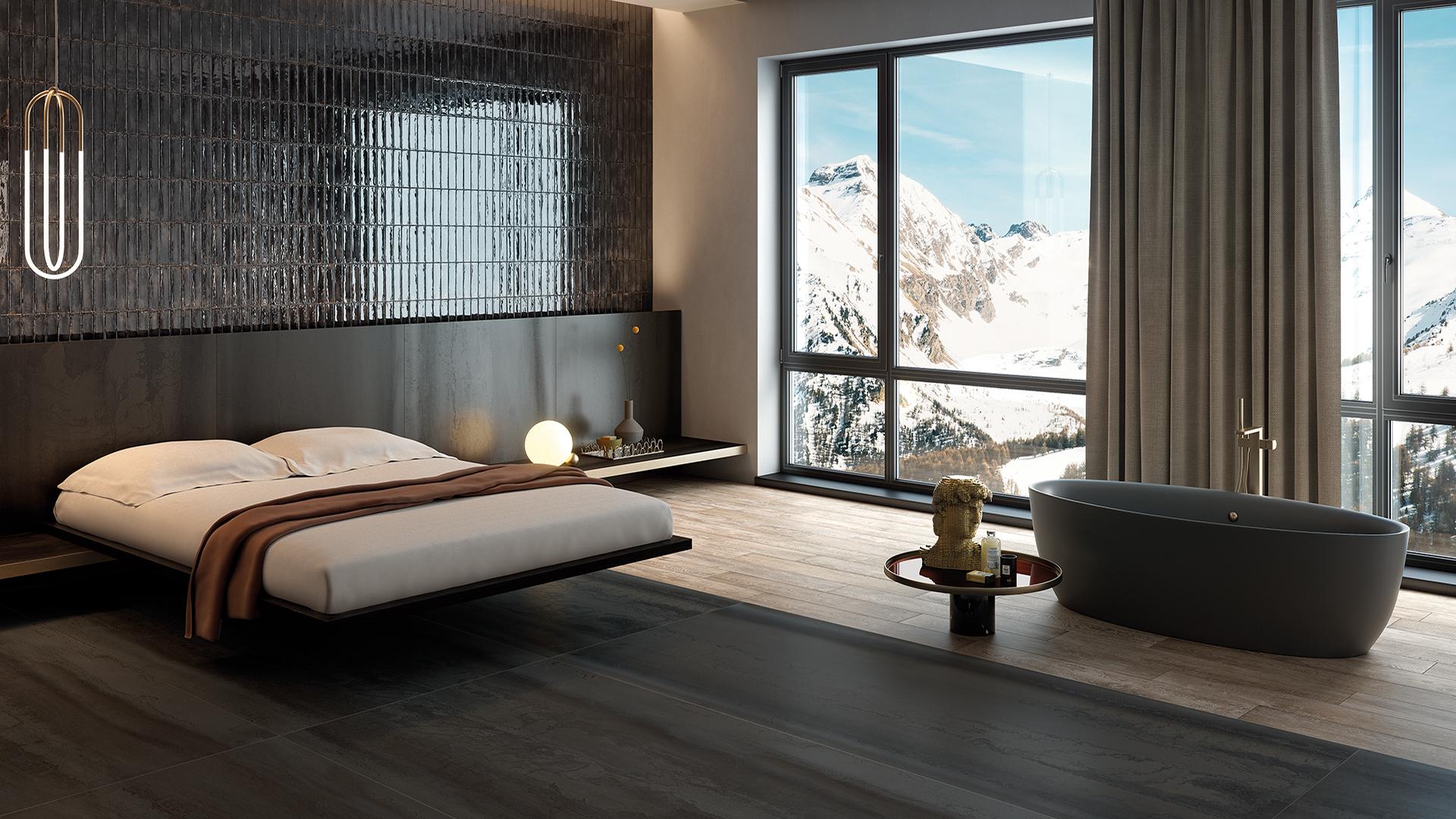
Wood-look porcelain tile can recreate an authentic industrial feel, as long as the look stays urban. Here, wood shouldn’t evoke a rustic style: it should warm up the space and create contrast through matte finishes, pronounced texture, natural tones, or a slightly smoked effect. That’s why it works best in living areas, on furniture and worktops, or as an insert that breaks up a colder base in concrete, stone, or metal.
Metal accents and raw materials interior design integration
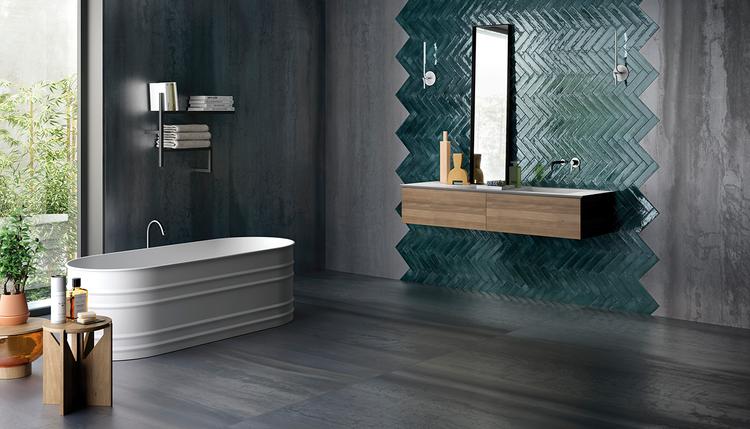
Among the most effective finishes for a contemporary industrial look is metal-effect porcelain tile, which combines a technical aesthetic with ceramic performance.
One example is Metallica by Viva, which interprets metal surfaces in a more tactile way, delivering a distinctive iridescent effect.
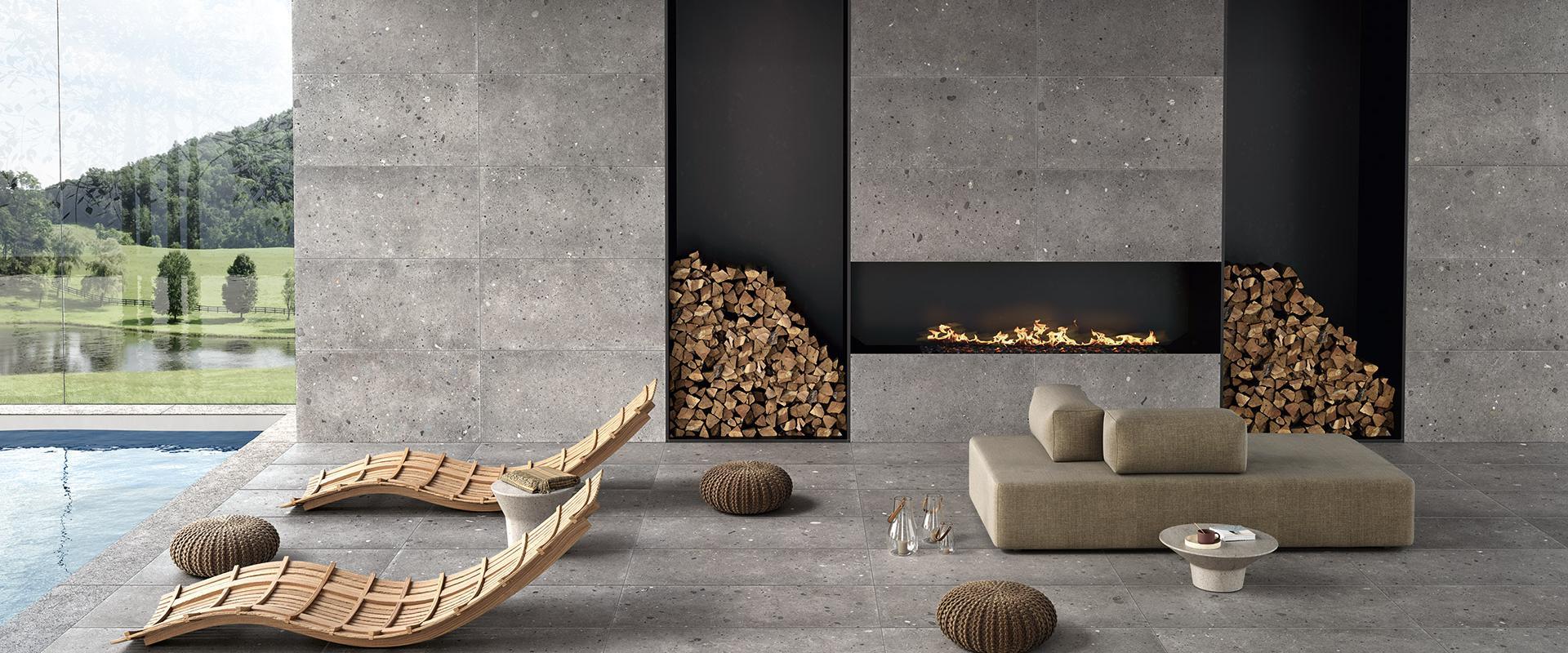
Metal performs best when paired with raw surfaces, exposed brick, concrete, stone, because this mix creates the typical industrial tension, where “cold” and “warm,” smooth and textured, coexist without cancelling each other out.
Concrete and stone elements: technical installation considerations
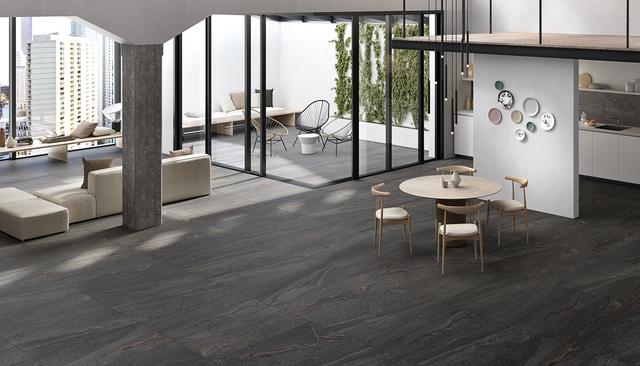
If the goal is a more “chic” look, a dark stone can be a winning choice. For instance, Dark Grey by Fabrika interprets concrete in a refined way without losing its essential, dynamic spirit. The surface irregularities preserve a tactile authenticity that makes it suitable for both indoor and outdoor projects.
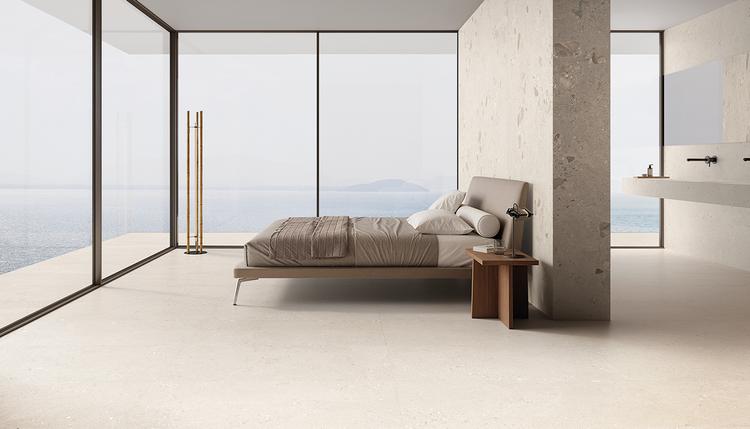
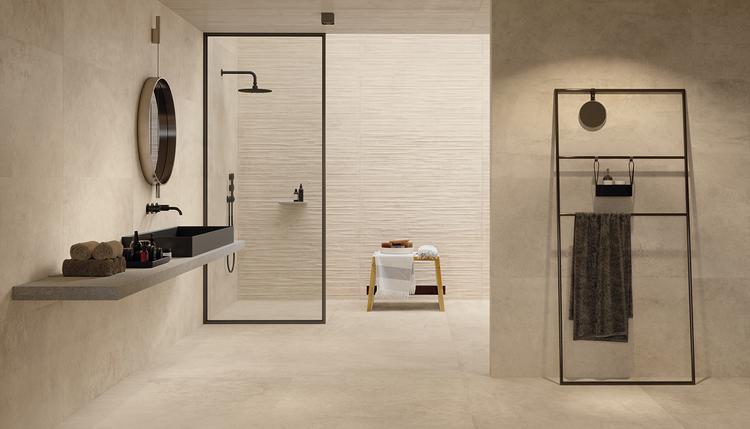
If you want a warmer, more sophisticated industrial style, a stone-effect porcelain tile can help create a more natural, textured feel: GemmaStone by Emilamerica, in its different versions, suits a contemporary loft aesthetic. For a less moody industrial chic result, choose lighter shades and pair them with dark profiles, industrial lighting, and bold tapware to keep the industrial character without making the space feel heavy.
Professional industrial style material solutions for your space
Technical surfaces like porcelain tile are the backbone of modern industrial design, especially in high-traffic residential or commercial projects. The difference between a DIY look and a professional outcome lies in the details: surface continuity, material transitions, and movement-joint planning.
To achieve a balanced look, follow this three-step system:
- Neutral base: choose a concrete or stone-effect floor;
- Warm element: add wood-look accents or furniture;
- Technical accents: use metals, glass, and dark hardware to "draw" the lines of the room.
Are you ready to design your industrial masterpiece? Explore Emilamerica’s collections to find the perfect synergy of aesthetics, durability and Italian-engineered practicality.
Collections used in the project



Related Articles


Any Questions?
If you are looking for the ideal covering for your home or business or you have any questions about our collections, don’t hesitate to get in touch! Together we’ll find your perfect bespoke solution!
If you are looking for the ideal covering for your home or business or you have any questions about our collections, don’t hesitate to get in touch! Together we’ll find your perfect bespoke solution!
Enter the Emilgroup world!
Stay up to date with the latest news from the world of ceramics. Find out about our new collections, events and innovative applications of porcelain stoneware.