Porcelain stoneware bathroom tiles: design guide for every style

10 luglio 2022
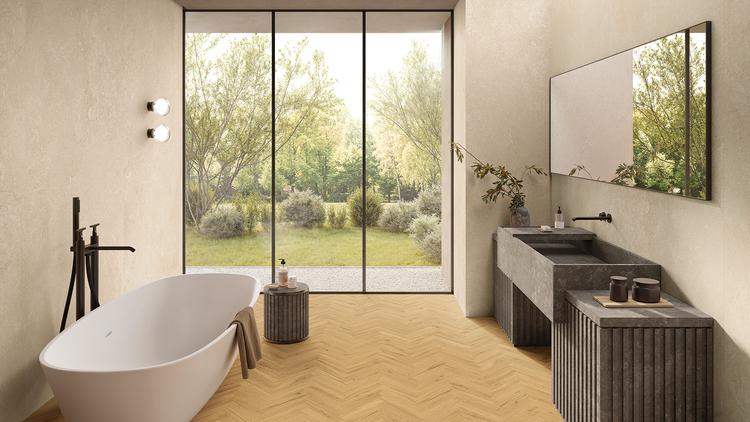
Choosing bathroom tiles is one of the most impactful decisions in any renovation project. The right surface can define the atmosphere of an entire space, making it minimal and serene, warm and textured, or bold and architectural.
Porcelain stoneware stands out as the material of choice for both residential and commercial bathrooms, combining unmatched technical performance with virtually limitless aesthetic possibilities: from concrete and marble effects to sculptural 3D surfaces, from large-format slabs to coordinated mosaic accents.
This guide covers everything you need to make an informed choice: formats, finishes, trending effects, renovation strategies for bathrooms of any size, and the Emilamerica collections best suited to each design direction.
How to choose porcelain stoneware bathroom tiles
Two factors drive every tile decision: aesthetic potential and technical performance. Porcelain stoneware excels at both.
On the technical side, the manufacturing process creates a dense, non-porous surface with water absorption below 0.5%, versus up to 10% for standard ceramics. The result is a material that is slip-resistant, impact-resistant, easy to clean, and chemically stable: essential properties for any bathroom surface.
Format: the first decision to make
Format determines how a space reads visually before any other variable. Porcelain stoneware is available from small mosaics to architectural slabs measuring up to 63 13/16" × 127 9/16":
- Small-format tiles (mosaics, strips) introduce compositional complexity and are ideal for accent walls, shower niches, and decorative feature areas.
- Mid-range formats (23 5/8" × 23 5/8", 23 5/8" × 47 1/4") are versatile and suited to most residential bathrooms, offering a balance between ease of installation and visual impact.
- Large-format tiles (31 1/2" × 63" and above) minimize grout joints, visually expand the space, and dramatically increase the realism of material effects.
- Large slabs (63" × 126" and above) create seamless, architectural surfaces ideal for minimal bathrooms and high-end commercial projects.
A particularly effective design approach, for both homeowners and designers, is to select coordinated collections across all bathroom surfaces: floor, walls, shower enclosure, and countertop. This ensures visual continuity and simplifies the specification process.
Bathroom tile colors and trending styles
Current bathroom design has moved well beyond the traditional white. While neutral palettes, creams, dove grays, warm whites, remain the backbone of contemporary interiors, there is growing appetite for expressive color choices used with precision.
- Neutral and tonal: cream, ice white, warm gray — safe, timeless, and easy to combine with any fixture.
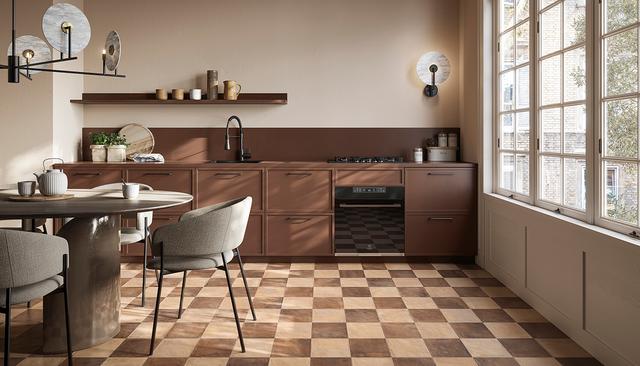
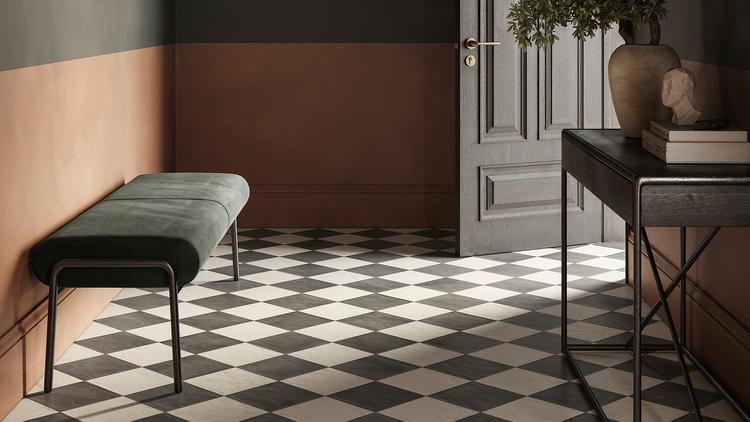
- Earthy accents: terracotta, sage green, dusty blue — increasingly popular as feature wall or shower enclosure choices.
- Deep and dramatic: anthracite, verdigris, dark taupe — architectural tones that work exceptionally well in larger bathrooms or shower volumes.
Re-Play Concrete by Provenza exemplifies this expressive range. Inspired by industrial architecture, the collection is available in six colors — from neutral Sand and White to the depth of Verdigris and Anthracite — in three design versions: Recupero (distressed finish), Cassaforma Flat (board-marked surface), and Cassaforma 3D (volumetric interlocking patterns). It is one of the most versatile options for creating bathrooms that feel both contemporary and materially rich.
The most popular tile effects for bathrooms
Concrete-effect tiles: modern, minimal, and architectural
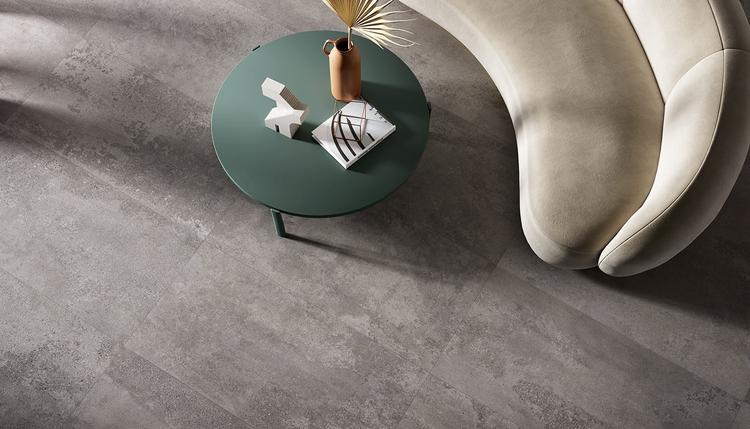
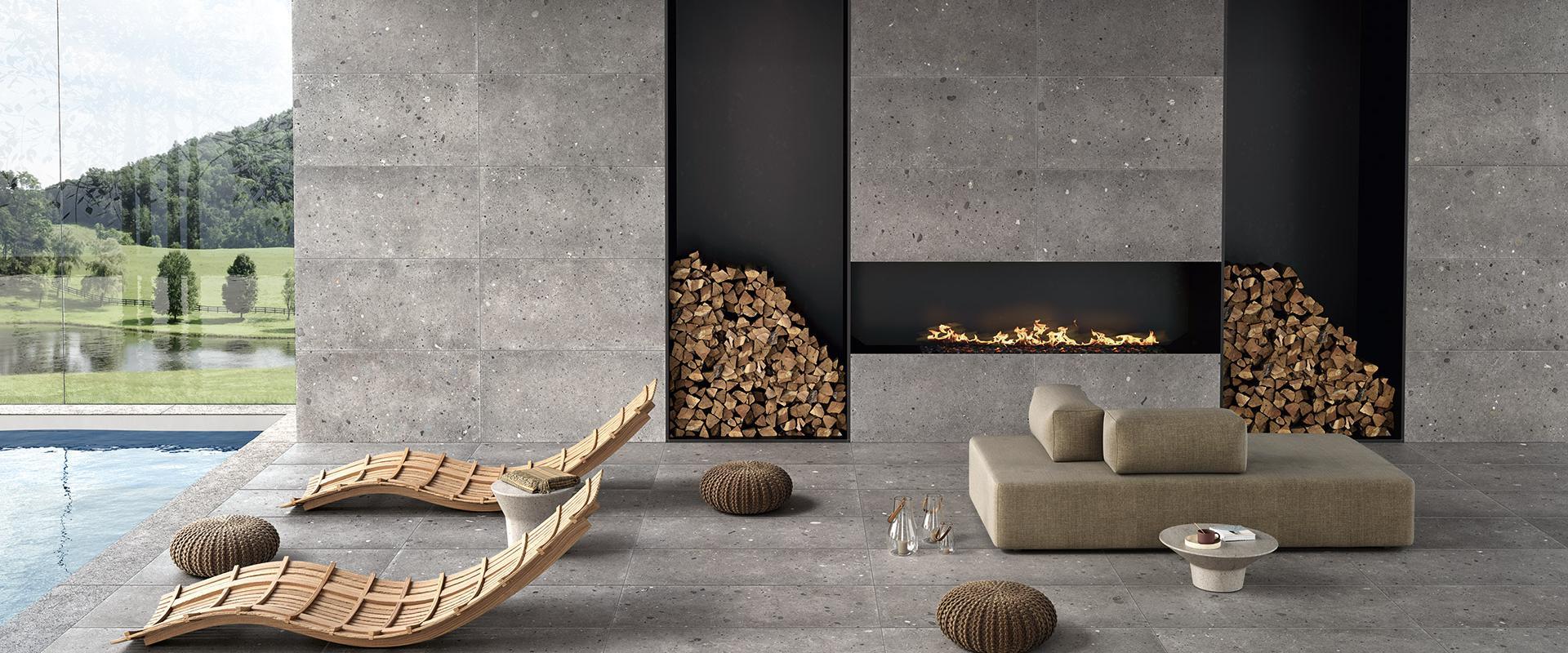
Concrete-effect bathroom tiles are among the strongest ongoing trends in contemporary design. The material's inherent solidity, juxtaposed with flowing water, creates spaces that feel elemental and calm. Unlike natural concrete, porcelain stoneware technology replicates the aesthetic while eliminating all practical limitations: full slip resistance, zero absorption, no sealing required.
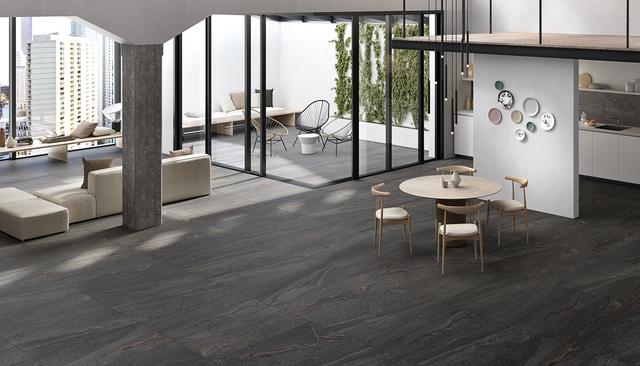
For large architectural surfaces, Level Concrete by Level is built around the power of large-format slabs (63" × 126" and 63 13/16" × 127 9/16"). Available in White, Ash, Taupe, and Dark Grey, it delivers uninterrupted surfaces across floors, walls, shower enclosures, and countertops.
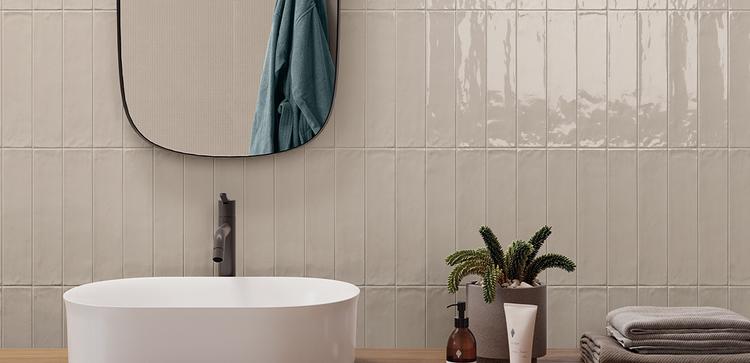
For a more tactile, industrial-inspired concrete look, Totalook by Emilceramica blends resin and concrete aesthetics in a complete design system. Available in five colors from Bianco to Blu Avio, with formats including Dolcelinea (horizontal multi-level relief), Incroci (geometric stamp), and Majolica Matt/Lux (glazed subway-style tiles with iridescent finish).
Marble-effect tiles: timeless elegance in the shower and beyond
Marble-effect porcelain stoneware brings the prestige of natural stone to the bathroom without the maintenance requirements, no sealing, no staining, no sensitivity to acidic products.
Tele di Marmo Onyx by Emilceramica is the definitive collection for high-impact marble installations. Available in formats up to 47 1/4" × 109 7/16", it reproduces the sumptuous veining and translucency of onyx in five vibrant, theatrical colorways. A single slab-sized tile becomes a statement wall.
Textured and 3D tiles: depth, character, and tactile contrast
Once purely functional, the bathroom has become one of the most design-intentional rooms in the home. Textured tiles are among the most significant current trends, introducing depth and tactile contrast that flat surfaces cannot achieve.
- 3D geometric tiles (triangular, hexagonal, square reliefs) are ideal for shower walls and feature walls — they produce a genuine 'wow' effect and create dynamic light-and-shadow patterns throughout the day.
- Horizontal stripe patterns make walls appear taller and are particularly effective in compact bathrooms combined with light colorways.
- Embossed wave-pattern tiles introduce movement and sensory warmth without visual excess — well-suited bathrooms designed for relaxation.
- Terrazzo-inspired surfaces combine the personality of Venetian Seminato with the technical precision of porcelain stoneware.
When combining textured tiles with gray or neutral base tiles, opt for a lighter or neutral colorway in the shower enclosure to create an interesting light-and-shadow contrast without visual overload.
Shower tiles: why large format is the best choice
The shower enclosure is one of the most visible and technically demanding surfaces in the bathroom. Porcelain stoneware brings critical advantages: moisture resistance, non-slip properties, and the ability to faithfully replicate refined natural materials at scale.
Large-format tiles are the recommended choice for showers because they minimize grout joints, reduce cleaning effort, and maximize the visual continuity of the surface — increasing the perceived realism of any material effect, whether marble, concrete, or stone.
Design tip: choose a tile collection that coordinates with the rest of the bathroom but maintains a distinct identity in the shower volume. Playing with finish (matte on the floor, satin or semi-gloss on the walls) within the same collection creates a cohesive yet spatially defined result.
Bathroom renovation: practical tile advice for any size
Renovation is the most common context in which homeowners revisit their tile choices. The bathroom is one of the most frequently used rooms in any home, and its surfaces, floor, walls, shower, are subject to continuous wear. Choosing certified, high-performance materials at the renovation stage prevents costly repeat interventions.
Porcelain stoneware is the optimal choice for bathroom renovation: it requires no sealing, resists chemical agents and staining, is compatible with underfloor heating, and is available in formats that work both as overlays (lay-on-lay in specific cases) and as complete replacement surfaces.
Tile strategies for small bathrooms
In compact bathrooms, tile selection has an outsized impact on perceived space. The key principles:
- Use large-format tiles (23 5/8" × 47 1/4" and above) — counterintuitively, they make rooms feel bigger by reducing the number of grout lines that fragment the surface.
- Extend tiles from floor to ceiling — the most contemporary approach, which fully recreates the continuity of a material like concrete or stone and avoids the outdated 2/3-height cut-off.
- Choose light or neutral colors as the base and reserve accent tones for a single feature wall or shower enclosure.
- Avoid mosaic tiles as the dominant surface in small bathrooms — their high grout-line density can make spaces feel busy and harder to clean.
Tile strategies for large bathrooms
Large bathrooms offer the opportunity to let materials breathe. Design choices that work particularly well:
- Large-format slabs (35 7/16" × 70 7/8", 63" × 126") for floors and walls create a seamless, vanishing effect that suits open-plan or hotel-style bathrooms.
- Coordinated collections across all surfaces — floor, walls, shower, countertop — bring architectural cohesion to expansive spaces.
- Stone-effect collections are especially effective at this scale.
- Open shower volumes can be enhanced with slab-format tiles that flow from the floor into the shower without interruption.
Porcelain stoneware countertops and vanity tops
Porcelain stoneware is not limited to floors and walls. Its technical properties, scratch resistance, zero porosity, resistance to cosmetics and cleaning agents, make it the material of choice for bathroom vanity tops, backsplashes, and countertops.
Level is the Emilgroup brand dedicated entirely to large-format slab solutions for surfaces. With slabs up to 63" × 126", the Level catalog offers refined, functional options that integrate seamlessly with any tile collection used on the walls and floor, creating a fully coordinated bathroom environment.
FAQ: porcelain stoneware bathroom tiles
What is the best tile for a bathroom floor?
Porcelain stoneware is widely considered the best material for bathroom floors. It is non-slip, non-absorbent, resistant to wear and chemicals, and easy to clean, making it both safe and hygienic. In terms of format, large tiles (23 5/8" × 47 1/4" and above) minimize grout lines and are easier to maintain, while also visually enlarging the space.
What bathroom tile trends are popular right now?
Current trends favor neutral and earthy palettes (warm grays, creams, soft whites) as the base, with expressive accent tones — sage green, dusty blue, terracotta — used on feature walls or in shower enclosures. Concrete-effect tiles continue to dominate for minimal, contemporary bathrooms. Textured and 3D tiles are growing fast as statement surfaces. Large-format and slab tiles remain the preferred choice for seamless, architectural results.
Are large-format tiles better for small bathrooms?
Counterintuitively, yes. Large-format tiles (23 5/8" × 47 1/4" or bigger) with minimal grout lines can make a small bathroom appear significantly larger. The key is to choose light or neutral colors and extend the tiles from floor to ceiling for a continuous, seamless effect. Small mosaic tiles, on the other hand, can fragment the space and make it feel busier.
What is the difference between matte and glossy bathroom tiles?
Matte tiles are generally recommended for bathroom floors due to better slip resistance when wet. Glossy or semi-glossy tiles are ideal for walls and shower enclosures, where they reflect light and enhance the feeling of space. A common and practical design approach is to combine both finishes — matte on the floor, glossy on the walls — within the same collection for visual contrast and functional balance.
Can I use the same tiles for the floor and the shower walls?
Yes, and it is one of the most recommended approaches. Using a single tile collection across the floor and shower walls creates visual continuity and makes the bathroom feel more spacious and coherent. For the shower floor specifically, choose a tile in a matte finish (or a matching anti-slip version) to ensure safety underfoot.
What are the advantages of porcelain stoneware over ceramic tiles in the bathroom?
Porcelain stoneware is denser, harder, and significantly more water-resistant than standard ceramic. Its water absorption rate (below 0.5%) is far lower than ceramic (up to 10%), and it requires no sealing. It is more resistant to wear, impact, and chemical agents, and is available in much larger formats, including architectural slabs that are simply not produced in ceramic.
Collections used in the project





Related Articles

Any Questions?
If you are looking for the ideal covering for your home or business or you have any questions about our collections, don’t hesitate to get in touch! Together we’ll find your perfect bespoke solution!
If you are looking for the ideal covering for your home or business or you have any questions about our collections, don’t hesitate to get in touch! Together we’ll find your perfect bespoke solution!
Enter the Emilgroup world!
Stay up to date with the latest news from the world of ceramics. Find out about our new collections, events and innovative applications of porcelain stoneware.