Beige porcelain tile: modern ideas for every space

27 luglio 2022
Beige porcelain tile brings warmth, versatility, and natural elegance to contemporary spaces. Far from the uniform “builder beige” finishes associated with the past, today’s beige surfaces include soft greige, taupe, sand, limestone, travertine, and marble-inspired designs.
The key to creating a modern result lies in selecting the right undertone, format, finish, grout color, and material combinations. Beige can provide a subtle foundation for understated interiors or become a distinctive design feature through texture, veining, and contrast.
From bathrooms and kitchens to living rooms and outdoor areas, discover how to use beige porcelain tile in a way that feels current, intentional, and suited to the character of each space.
Is beige tile outdated?
No, beige tile is not outdated. What can appear dated is a specific shade of beige or the way it is combined with other design elements.
Yellow, orange, or pink-toned tiles, small glossy formats, and bright white grout can recall residential interiors from the late 1990s and early 2000s. Contemporary beige tile takes a different approach, favoring balanced undertones, matte finishes, larger formats, and carefully selected contrasts.
| Design element | Can feel dated | Modern approach |
|---|---|---|
| Undertone | Yellow, orange, or pink beige | Greige, taupe, sand, and balanced warm beige |
| Format | Small glossy square tiles | Large-format matte porcelain tile |
| Grout | Bright white, high-contrast lines | Tonal beige, tan, or warm gray grout |
| Layout | Repetitive straight grid | Vertical stack, herringbone, or continuous surfaces |
| Pairings | Beige combined only with similar neutrals | Warm wood, black details, white, green, and natural materials |
Beige itself remains a timeless neutral. Its final appearance depends on the colors, materials, finishes, and furnishings that surround it.
How to make beige porcelain tile look modern
Modern beige tile design is based on balance. Rather than using the same shade throughout the entire room, contemporary interiors combine tonal variation, different textures, and contrasting details.
1. Choose modern beige tile colors
The undertone has a major influence on the final effect.
Greige, taupe, and sand generally feel more contemporary than strongly yellow or orange beige. Greige is especially versatile because it combines the warmth of beige with the more balanced character of gray.
The Elegance Pro collection by Ergon interprets this palette through neutral shades such as Ivory, Sand, and Taupe.
Before choosing, compare the tile with the room’s natural light, wall color, cabinetry, and countertops. The same surface can appear warmer or cooler depending on its surroundings.
2. Use large-format beige porcelain tile
Large-format tile creates fewer grout lines, making floors and walls appear more continuous.
A nominal 12 x 24-inch format works well in bathrooms, kitchens, and living spaces, while larger sizes create a more architectural effect in open-plan interiors.
Matte and natural finishes also tend to feel softer and more contemporary than highly polished surfaces. In smaller rooms, fewer joints can reduce visual interruptions and help the space feel more open.
3. Pair beige tile with contrasting materials
Beige can feel flat when every element in a room has the same color and intensity. Contrast gives the surface definition.
Warm wood reinforces its natural character, while matte black fixtures create a more graphic effect. White brightens the palette, and deep green, navy, terracotta, bronze, or charcoal can add depth.
Texture is equally important. Fluted wood, brushed metal, woven fabrics, veined porcelain, and ribbed glass can make a beige interior feel layered without introducing too many colors.
4. Choose the right grout color for beige tile
Grout can significantly change the appearance of beige tile.
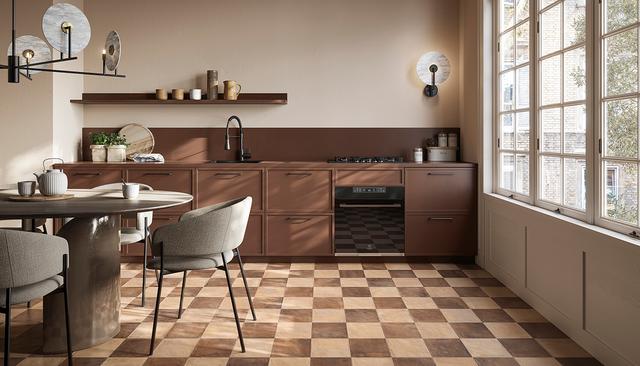
A matching beige or tan grout creates a seamless surface, while a darker grout emphasizes the tile format and layout. Tonal grout is usually the best option for large-format tiles, minimalist interiors, and stone-inspired surfaces.
Always test grout next to the actual tile. A cool gray grout may make warm beige appear more yellow, while a warm neutral creates a more balanced result.
What colors go with beige tile?
Beige works with both neutral and contrasting palettes.
For a calm interior, combine it with cream, warm white, sand, taupe, mushroom, or greige. Introduce variation through wood, textiles, lighting, and different matte finishes so the space does not feel overly uniform.
For a more contemporary result, use matte black, dark wood, crisp white, deep green, navy, or charcoal. Terracotta, bronze, and muted clay tones reinforce the warmth of beige and work particularly well in Mediterranean-inspired spaces.
Strongly blue-based grays and very cool whites should be used carefully with yellow beige, as they can make its warm undertone appear more pronounced.
What grout color works with beige tile?
The best grout depends on the tile undertone, size, and desired effect.
| Grout color | Effect | Best use |
|---|---|---|
| Beige or tan | Seamless and continuous | Large formats and small rooms |
| Warm light gray | Subtle definition | Greige and balanced beige |
| Warm brown | Greater depth | Stone-inspired floors |
| Charcoal | Strong graphic contrast | Patterns and feature walls |
| Bright white | Emphasizes every joint | Small decorative areas |
For high-traffic floors, a slightly darker tonal grout may also be more practical than a very light shade.
Beige porcelain tile ideas by room
Beige bathroom and shower tile ideas
Beige is a natural choice for bathrooms because it adds warmth without making the room feel dark.
Large-format beige porcelain tile can be used across floors and walls to create a calm, spa-inspired atmosphere. Pair it with a floating wood vanity, matte black or brushed metal faucets, warm white walls, and frameless glass.
In a small bathroom, light beige or greige tile with tonal grout helps reduce visual interruptions. In the shower, use a surface with the appropriate technical and slip-resistance characteristics for each application.
A mosaic, textured finish, or slightly darker beige can define the shower floor while preserving the continuity of the overall palette.
Beige kitchen floor and backsplash tile ideas
A beige porcelain floor creates a versatile base for natural wood, white, green, navy, or dark cabinetry.
For a backsplash, travertine- or marble-effect porcelain adds more depth than a uniform beige surface. Unique Travertine by Provenza recreates the layered character of natural travertine, while Tele di Marmo Crystal by Emilceramica offers a more luminous marble-inspired look.
When the surface already features pronounced veining, choose a simple layout and tonal grout so that the material remains the main visual feature.
Beige porcelain floor tile for living rooms
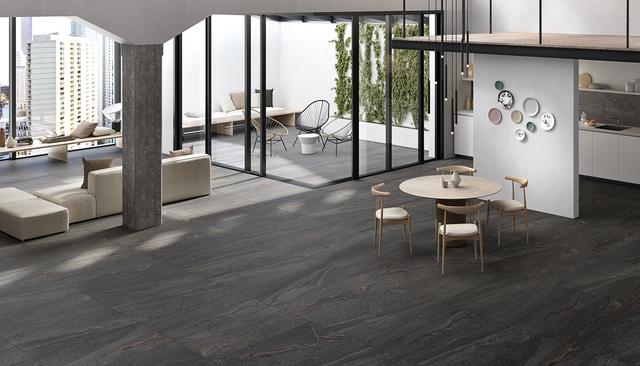
Beige porcelain floor tile can connect the kitchen, dining area, and living room within an open-plan space.
A large-format stone-effect surface creates visual continuity, while subtle tonal variation prevents the floor from appearing flat. Warm wood furniture, linen textiles, black metal details, textured rugs, and green accents can complete the design.
Travertine-inspired porcelain also adds natural movement and architectural character without the maintenance requirements of natural stone.
Beige marble- and travertine-effect porcelain tile
Marble- and travertine-effect porcelain adds veining, mineral variation, and tonal movement to beige surfaces.
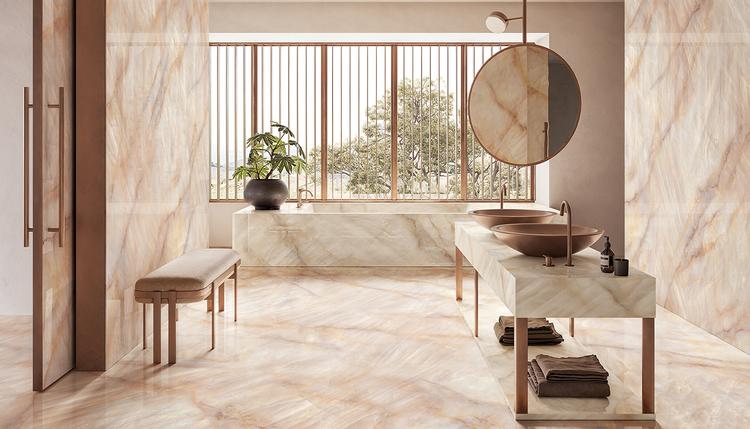
Travertine effects create a warm and architectural appearance, while marble-inspired designs feel brighter and more refined. Both can be used for bathroom walls, kitchen backsplashes, shower niches, feature walls, fireplace surrounds, and living room floors.
When the surface has strong variation, keep the layout and surrounding materials relatively simple to avoid a visually crowded result.
Beige outdoor porcelain tile for patios and terraces
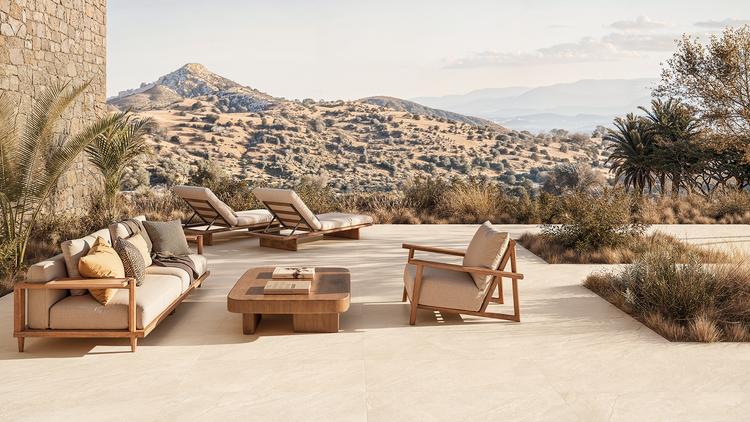
Beige outdoor porcelain tile coordinates naturally with landscaping, stone, wood, and exterior architecture.
A similar color can be used indoors and outdoors to create visual continuity, while adapting the finish to the technical requirements of each space.
For patios, terraces, and pool areas, always check the product specifications for surface texture, wet DCOF performance, frost resistance, thickness, and installation method.
Outdoor porcelain combines a natural appearance with low water absorption and resistance to weather and intensive use, making it suitable for many residential and commercial applications.
How to choose beige porcelain tile
Begin with the undertone. Warm beige works well with oak, cream, bronze, and earthy colors, while greige offers greater flexibility with black, gray, and cooler finishes.
Then consider the room’s light. Strong sunlight can emphasize yellow undertones, while lower-light spaces may make beige appear darker or cooler.
Tile size and finish should respond to the application. Large formats create continuity, while smaller formats and mosaics are useful for shower floors, backsplashes, and decorative details. Matte finishes generally offer a softer appearance, while textured surfaces may be necessary in wet or outdoor areas.
Finally, order physical samples whenever possible. Digital images cannot fully reproduce color, texture, veining, and surface variation.
Frequently asked questions about beige porcelain tile
Is beige porcelain tile still in style?
Yes. Beige porcelain tile remains a versatile choice for contemporary interiors because it adds warmth without dominating the space. Greige and taupe undertones, matte finishes, large formats, and natural stone effects give modern beige tile a more balanced and sophisticated appearance.
How can you update a bathroom with beige tile?
An existing beige bathroom can be modernized without replacing all the tile. Changing the grout color, wall paint, faucets, vanity, mirror, lighting, shower enclosure, and accessories can significantly transform the room.
Warm wood, matte black details, and a coordinated neutral wall color can make existing beige tile feel much more current.
Is beige tile good for a small bathroom?
Yes. Light beige tile can make a small bathroom feel warmer than stark white while still maintaining brightness.
Large formats, tonal grout, and a limited number of surface changes reduce visual interruptions and can help the room feel more spacious and continuous.
Does beige tile show dirt easily?
Mid-tone beige generally disguises dust, water spots, and everyday marks better than very light or very dark surfaces.
A matte finish and tonal grout can make beige porcelain tile a practical option for bathrooms, kitchens, entryways, and high-traffic floors.
What flooring goes with beige wall tile?
Warm wood-effect porcelain, greige stone-effect tile, and tonal beige flooring can all coordinate well with beige wall tile.
The most important consideration is the undertone. Warm beige walls usually work best with flooring that has warm or neutral undertones, while greige wall tile offers greater flexibility with cooler surfaces.
Can beige porcelain tile be used outdoors?
Yes, provided that the selected porcelain tile is specifically rated for exterior use and meets the technical requirements of the project.
Outdoor areas may require a textured finish, suitable wet DCOF performance, greater thickness, frost resistance, or a specific installation method. Always consult the product specification sheet before selecting an outdoor surface.
What grout color makes beige tile look modern?
Tonal beige, tan, or warm light gray grout usually creates the most contemporary result because it reduces contrast and makes the tiled surface appear more continuous.
Darker grout can also look modern when used intentionally for checkerboard floors, feature walls, herringbone layouts, or other decorative patterns.
Why beige porcelain tile is a timeless design choice
Beige porcelain tile is no longer defined by one shade, style, or design period.
Contemporary collections explore a broad range of greige, sand, taupe, limestone, marble, and travertine effects. Through the right combination of undertone, format, finish, grout, and contrasting materials, beige can feel warm, sophisticated, and distinctly modern.
Its versatility also allows it to adapt to changing furniture, colors, and decorative styles over time.
From quiet bathrooms and open-plan living spaces to kitchens, patios, and coordinated indoor-outdoor projects, beige porcelain tile remains a flexible foundation for spaces designed to last.
Collections used in the project




Related Articles


Any Questions?
If you are looking for the ideal covering for your home or business or you have any questions about our collections, don’t hesitate to get in touch! Together we’ll find your perfect bespoke solution!
If you are looking for the ideal covering for your home or business or you have any questions about our collections, don’t hesitate to get in touch! Together we’ll find your perfect bespoke solution!
Enter the Emilgroup world!
Stay up to date with the latest news from the world of ceramics. Find out about our new collections, events and innovative applications of porcelain stoneware.