Outdoor patio tiles: how to choose the right porcelain for every spaceideas for patio
19 maggio 2022
The patio is no longer a secondary surface. It's an extension of the living space — a zone for meals, relaxation, and entertaining that deserves the same material quality as any interior floor. The difference is that outdoor tiles have to do more: resist frost, standing water, UV exposure, thermal cycling, and foot traffic, all while maintaining their appearance year after year.
Porcelain stoneware is the only tile material that handles all of these demands without compromise. It's frost-proof, waterproof, non-absorbent, and available in every finish from natural stone to wood grain — making indoor-outdoor visual continuity genuinely achievable. This guide covers what to look for when choosing outdoor patio tiles, and which design directions work best for different outdoor contexts.
What to look for in outdoor patio tiles: the technical requirements
Not every tile that works indoors is suitable for outdoor use. Four technical properties determine whether a porcelain tile is genuinely fit for a patio:
- Frost resistance: outdoor tiles must withstand freeze-thaw cycles without cracking. Porcelain stoneware, with water absorption below 0.5%, is inherently frost-proof. Always verify this is specified for any tile intended for outdoor use.
- Anti-slip surface: a patio tile that becomes dangerous when wet is a failed specification. For outdoor use, look for Naturale or Tecnica surface finishes, which provide the grip coefficient required for safe use in wet conditions. Glossy or lappato finishes are not suitable for outdoor floors.
- Thickness: outdoor installation over a prepared bed requires a minimum ¾" thickness for structural stability, particularly for terraces and patios subject to variable loads. Confirm the outdoor format is available before specifying.
- UV stability: porcelain stoneware's color is fired through the full body of the tile, not applied to the surface, so it maintains its appearance indefinitely without UV degradation.
What is the best tile for an outdoor patio?
The answer depends on the aesthetic brief, but three material directions cover the vast majority of outdoor design requirements.
Stone-effect outdoor patio tiles: the most versatile option
Stone-effect porcelain is the most widely specified material for outdoor patios: it reads as natural and architectural simultaneously, works in every climate, and coordinates with virtually any exterior landscaping.
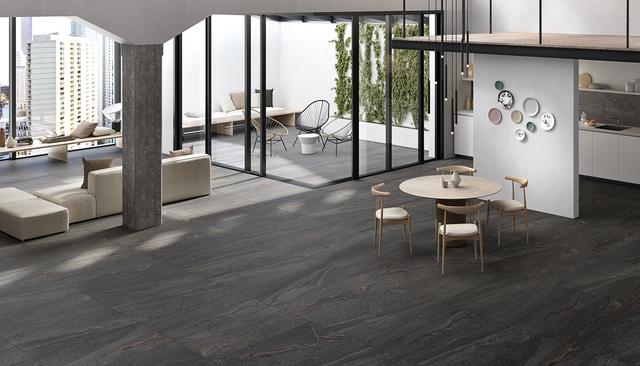
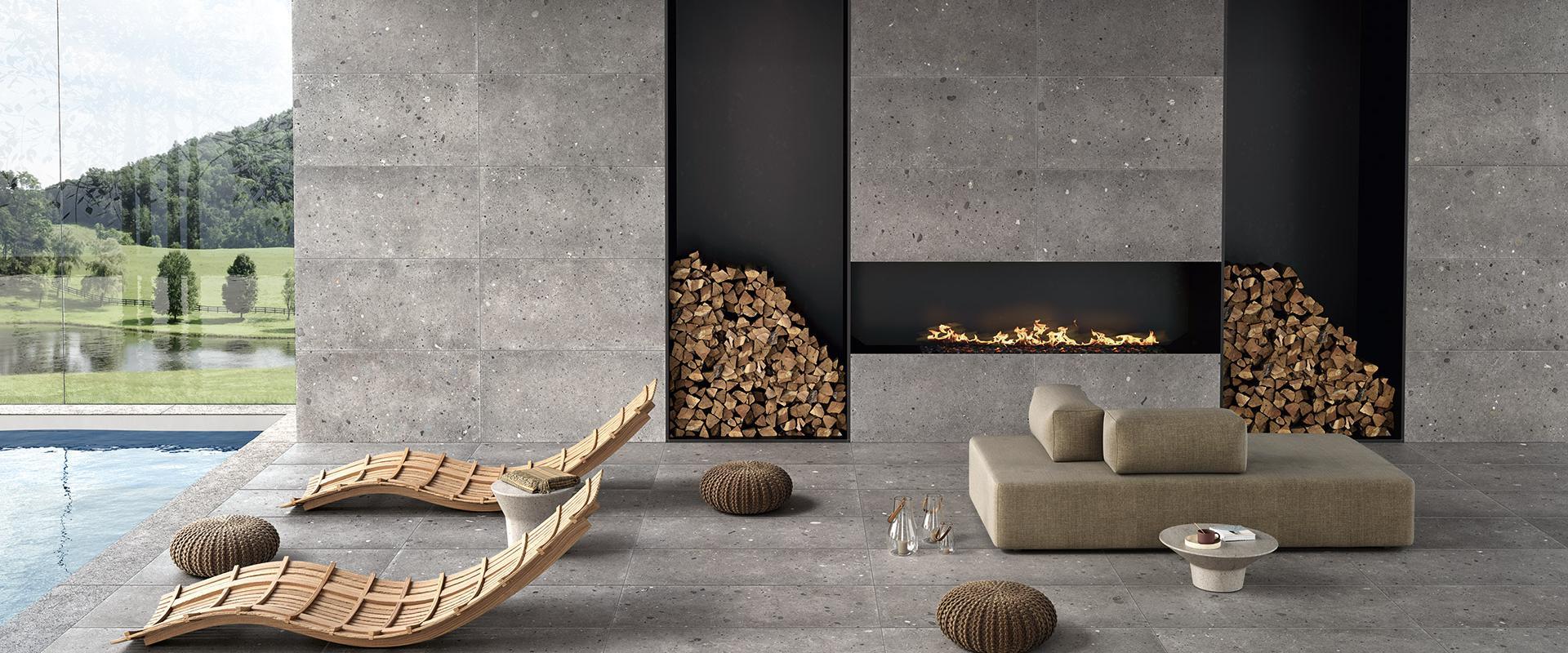
Oros Stone by Ergon is inspired by Greek quartzite — a light-active stone whose microcrystal structure generates constantly shifting surface effects depending on the light angle. Available in six colors from White to Anthracite, with a ¾" outdoor format and a Tecnica anti-slip surface rated for heavy commercial use. The Multi Prestige Brecciato modular format — nine different sizes with chipped edges — replicates the irregular, organic character of split quartzite for patios where a natural, non-uniform aesthetic is the goal.
Travertine-effect outdoor tiles: warmth and timeless character
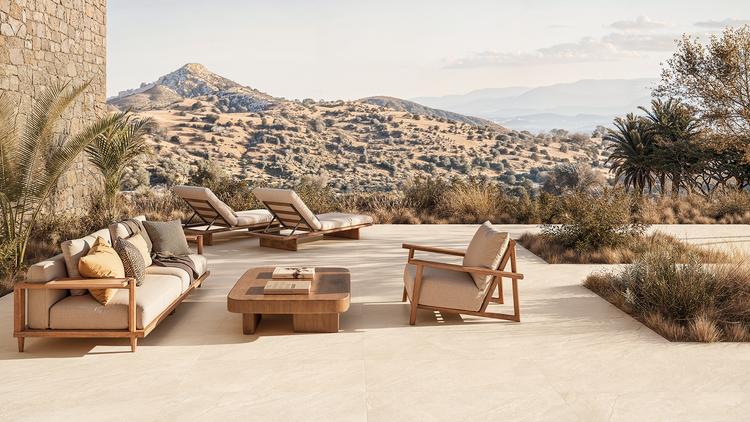
Travertine has defined Mediterranean outdoor architecture for centuries. Its warm tones and textural surface make it one of the most instinctively appealing choices for a patio — and porcelain stoneware delivers this without the maintenance burden of real stone, which requires sealing and stains easily outdoors.
Unique Travertine by Provenza covers the full spectrum of travertine character across four finishes: Vein Cut (the classic lengthwise vein pattern), Minimal (clean and contemporary), Ruled (three-dimensional grooves for maximum tactile depth), and Ancient (a timeworn effect for period or vintage-inflected projects). For outdoor use, it's available in 47¼"×47¼" at ⅜" with Naturale and Tecnica anti-slip surfaces, and in 23⅝"×47¼" at ¾".
Wood-effect outdoor patio tiles: warmth and indoor-outdoor continuity
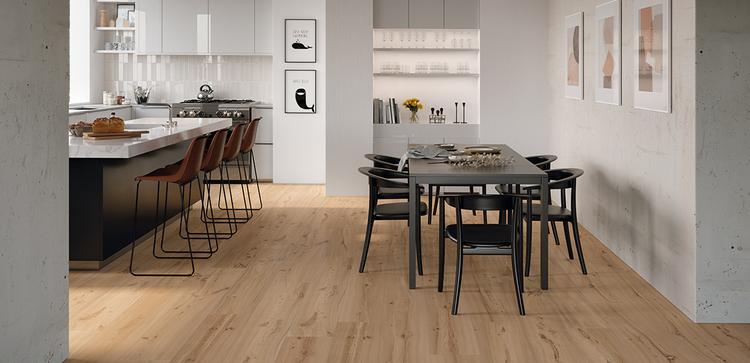
Wood-effect porcelain patio tiles solve the fundamental problem of using real wood outdoors: decking warps, fades, splinters, and requires annual maintenance. Porcelain delivers the same visual warmth with none of those limitations.
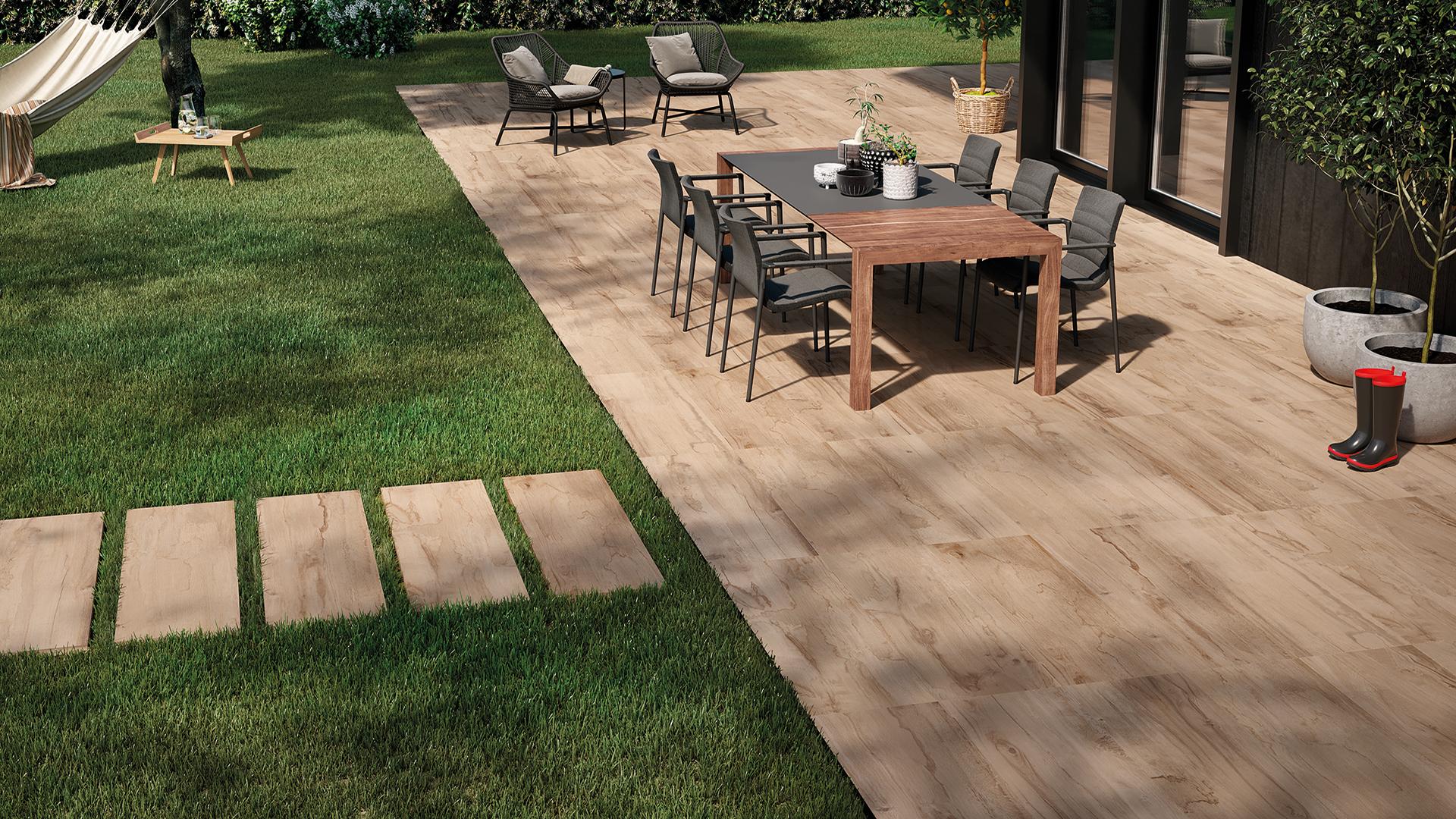
Millelegni Remake by Emilceramica offers four versions across two wood species — North American elm and oxidized Alpine oak. The oxidized oak variants are particularly effective outdoors: the weathered character of the surface reads as entirely natural in an exterior context, as if the material has already been seasoned by the elements.
For indoor-outdoor continuity, extending the interior floor material directly onto a connected terrace, Millelegni Remake is the most direct solution, since the same collection works across both environments.
Outdoor patio tile design ideas: indoor-outdoor continuity
The strongest contemporary approach to outdoor tiling is continuity: using the same or coordinated material across the interior floor and the connected terrace, dissolving the visual boundary between inside and out. This requires a collection that offers both an indoor tile and a coordinated outdoor ¾" format in the same colors — exactly what Unique Travertine and Oros Stone provide.
A large sliding glass door becomes visually transparent when the floor reads as continuous: the same travertine tile on the living room floor extending without interruption onto the terrace, with only the thickness change concealed in the door threshold.
For a garden path connecting terrace to lawn, Oros Stone in the Multi Prestige Brecciato modular format creates a surface with the irregular, organic character of real stone — credible in a landscape context in a way that regular-format tiles rarely achieve. For the pool edge specifically, the Tecnica anti-slip surface in Oros Stone provides the grip coefficient required for safe use around water while maintaining a coherent material palette across the entire outdoor zone.
FAQ
How do I clean outdoor patio tiles?
Porcelain stoneware requires no specialist cleaning products. For routine maintenance, sweeping and occasional washing with water and a neutral detergent is sufficient. For organic stains — moss, algae, leaves — a diluted acid-based cleaner applied periodically is effective and will not damage the tile surface. Avoid bleach on colored grout joints. Pressure washing is safe on porcelain provided it's used at moderate pressure and at an angle, not directly on grout lines.
Is tiling a patio a good idea?
Yes, porcelain stoneware is the most durable, low-maintenance outdoor surface available. It outperforms wood, natural stone, and concrete pavers on every practical measure: no sealing, no warping, no staining, no fading. The upfront specification cost is offset by zero ongoing maintenance.
What grout should I use for outdoor patio tile?
For outdoor installations, epoxy grout is the most durable option: it's waterproof, frost-resistant, and does not absorb moisture or organic matter. If using cementitious grout, ensure it is rated for external use and treat it with a grout sealer after installation. Joint width for ¾" outdoor porcelain tiles is typically ⅛" - ³⁄₁₆" to accommodate thermal movement.
How do you tile a patio on a slope?
A sloped substrate requires careful substrate preparation and tile layout planning. The surface must slope away from the building at a minimum gradient of 1–2% for drainage. Tiles should be laid starting from the highest point, working toward the drain or edge. A notched trowel technique with back-buttering ensures full adhesive contact on sloped surfaces, which is critical for outdoor durability. For slopes steeper than 5%, consult a specialist installer.
Collections used in the project




Related Articles


Any Questions?
If you are looking for the ideal covering for your home or business or you have any questions about our collections, don’t hesitate to get in touch! Together we’ll find your perfect bespoke solution!
If you are looking for the ideal covering for your home or business or you have any questions about our collections, don’t hesitate to get in touch! Together we’ll find your perfect bespoke solution!
Enter the Emilgroup world!
Stay up to date with the latest news from the world of ceramics. Find out about our new collections, events and innovative applications of porcelain stoneware.