The irresistible versatility of oak effect floor tiles

08 aprile 2021
Tired of floors that scratch, stain, and lose their appeal over time? Oak effect floor tiles solve all of this — combining the natural warmth of wood with the durability of porcelain, in any space from a bathroom to a commercial kitchen.
Their versatility adapts perfectly to both private and public environments, formal and informal, without ever sacrificing the authentic beauty of natural wood grain. Here's everything you need to know before choosing.
What are oak effect tiles and why choose them?
Oak effect ceramic floor tiles replicate the grain, texture, and warmth of real oak wood — without any of its limitations. Two properties make them stand out: exceptional technical performance and genuine aesthetic depth.
Oak is one of the most beloved wood species in interior design for its balanced grain pattern, warm undertones, and timeless character. Porcelain tiles that replicate it inherit all the visual appeal while adding properties real wood simply cannot offer.
What are the benefits of choosing wood-look tiles over real hardwood floors?
Oak effect porcelain floor tiles are significantly more durable than real wood. They resist wear from foot traffic, abrasion, and daily use, and are both fireproof and waterproof — making them suitable for areas where real hardwood would fail entirely. Unlike traditional parquet, which requires periodic sanding, oiling, or lacquering, oak floor tiles retain their finish for decades with no special maintenance.
| Feature | Oak effect porcelain tile | Real Oak hardwood |
|---|---|---|
| Water resistance | Fully waterproof | Swells and warps |
| Scratch resistance | High (PEI IV–V) | Requires protection |
| Maintenance | Standard cleaning only | Periodic sanding and oiling |
| Underfloor heating | Compatible | Risk of cracking |
| Fire resistance | Fireproof | Combustible |
| Lifespan | 30+ years, no alteration | Depends on upkeep |
| Wet areas | Bathroom, kitchen | Not recommended |
What floor tile looks like real wood?
Wood plank porcelain tile is the format that most closely replicates real hardwood. Long, narrow planks — typically 8×48" or 6×36" — mimic the proportions of traditional floorboards, especially when laid in staggered or offset patterns. The best collections use multiple print variations per format, ensuring no two tiles are identical, just as no two planks of real oak are the same.
Are there different types of natural oak finishes available for flooring?
Modern oak effect tiles cover the full spectrum of natural oak processing:
| Finish | Visual Character | Best used in |
|---|---|---|
| Natural / raw oak | Light, open grain; warm honey tones | Rustic, Scandinavian, transitional |
| White-washed / bleached | Cool, airy, pale | Minimalist, coastal, Nordic |
| Smoked / dark stained | Deep chiaroscuro; dramatic | Contemporary, industrial, high-contrast |
| Brushed / wire-brushed | Textured surface, emphasized grain | High-traffic areas; slip resistance |
| Resin-treated / reclaimed | Aged complexity, resin inlays | Design-forward, artisan aesthetic |
White oak tile: creating contrast and luminosity
Is your living room defined by dark furniture — a black leather sofa or deep-toned cabinetry? White oak floor tiles create a powerful contrast that brings the entire space to life.
Alter by Provenza is the reference collection for this effect: inspired by the ancient allure of oak, it celebrates the character of precious salvaged wood treated with injections of colored resin. From the four available finishes, Sbiancato is the standout choice — it combines the structural warmth of wood grain with the luminous quality of resin finishing, flooding the room with light.
The same logic applies to the bathroom. Paired with dark fixtures — slate, matte black, or dark bronze — white oak flooring creates a space that reads as both deeply natural and sharply contemporary.
Oak floor tiles: bathroom and kitchen applications
Oak floor tiles bathroom
The bathroom is where oak effect porcelain floor tiles perform best relative to real wood. Moisture, steam, and underfloor heating are incompatible with hardwood — but pose no challenge to porcelain. The result is a bathroom with the warmth of a spa, without the maintenance burden. For a cohesive look, extend the same tile from floor to feature wall using large-format planks to minimize grout lines.
Kitchen oak floor tiles
In the kitchen, oak ceramic tile flooring handles spills, heat, and heavy foot traffic that would damage real wood within months. A wire-brushed or relief surface adds slip resistance while maintaining the aesthetic warmth of oak.
Herringbone pattern: the most captivating way to lay oak tiles
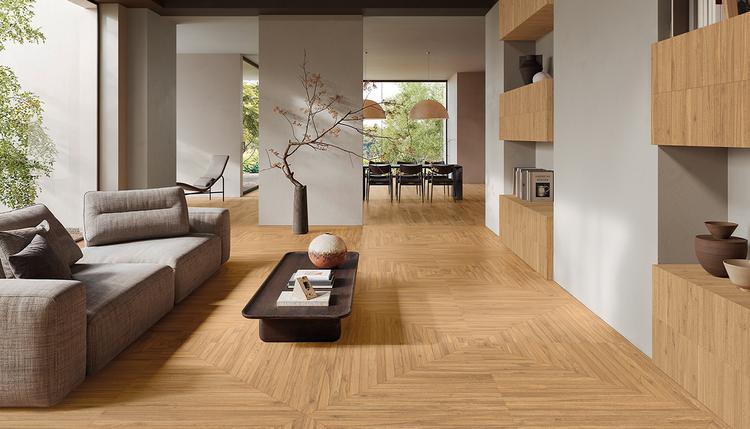
Oak tiles in herringbone transform a floor from background to design statement. The pattern adds visual energy and architectural character — particularly effective in corridors, kitchens, and open-plan spaces. The geometry amplifies the directionality of the wood grain, creating a surface that shifts in appearance with the light.
Are oak floors still in style? And what tile looks good with them?
Yes — and the range has expanded. Oak ceramic tile flooring today spans pale Scandinavian tones to deep smoked finishes, making it compatible with minimalist, industrial, rustic, and contemporary interiors alike.
When oak is already the dominant floor surface, the most effective wall pairings are:
- Neutral matte tiles — off-white, warm grey, or greige — that recede and let the floor lead
- Stone-effect tiles in limestone or travertine tones for continuity without repetition
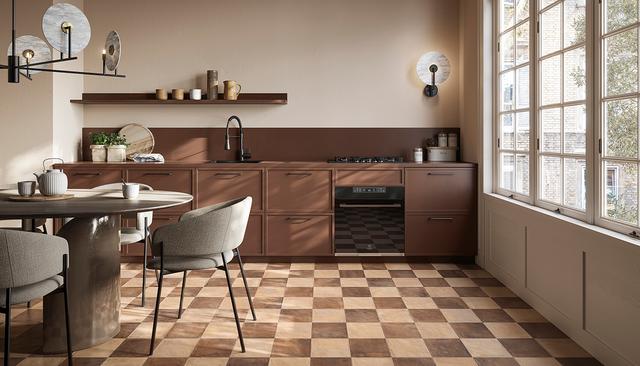
- Solid-color large-format slabs in tones pulled from the oak grain itself — dusty rose, clay, sage green
The principle: contrast in finish, continuity in warmth. Cool-toned wall tiles fight with oak's warmth; tiles in the same temperature range — even if visually different — produce a more resolved interior.
Can you recommend some innovative oak design ideas for modern homes?
Mixed-finish contrast: combine a natural oak floor tile with a smoked or dark-stained wall tile in the same format. Tonal variation between floor and wall creates depth without introducing a second material.
Large-format planks: oversized formats (12×48" or larger) reduce grout frequency and produce a floor that reads as seamless — closer to real hardwood in perception.
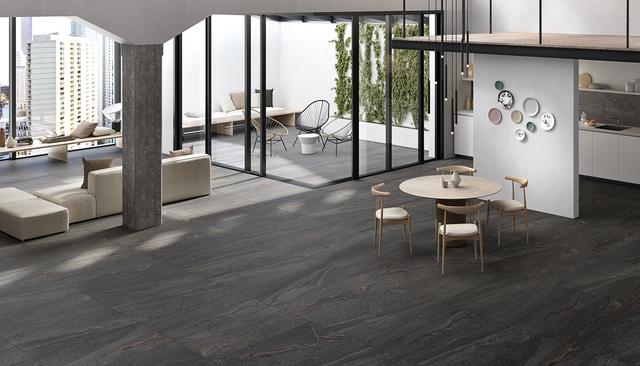
Dark oak as the primary surface: Millelegni by Emilceramica Scottish Oak delivers an intense chiaroscuro effect across a richly textured surface. Paired with pale walls and minimal furniture, it produces interiors with genuine visual authority.
Reclaimed oak in a contemporary setting: Alter by Provenza Bruciato — the deepest tone in the collection — uses resin inlay to create the visual complexity of centuries-old timber. In a pared-back, high-contrast interior, it reads as a bold material statement.
For spaces requiring natural warmth with a less predictable character, Playwood by Emilceramica offers a wood-effect surface with refined articulation — a strong option when classic oak feels too expected.
FAQ
What floor tile looks like real wood?
Wood plank porcelain in elongated formats with a textured or relief surface. The realism comes from print variation — collections that use 5+ different facial variations per tile eliminate the repetition pattern that immediately reads as artificial.
Are oak floors still in style?
More than ever. Smoked, brushed, resin-treated, and white-washed finishes make oak compatible with design directions — from Japandi to industrial loft to high-contrast contemporary — that would have rejected it a decade ago.
What are the benefits of choosing wood-look tiles over real hardwood floors?
The decisive advantages are in performance: waterproof, scratch-resistant, fireproof, compatible with underfloor heating, and installable in wet areas. For spaces like bathrooms and commercial kitchens, real hardwood is not a viable alternative — oak effect porcelain is.
What tile looks good with oak floors?
Stay in the same warmth register as the oak tone you've chosen. Warm greys, greige, travertine, and off-white work. Cool whites, blue-greys, or high-gloss surfaces create visual tension with oak's inherent warmth.
Are there different types of natural oak finishes available for flooring?
Five main categories: natural/raw, white-washed, smoked/dark stained, brushed, and resin-treated or reclaimed. The choice determines the entire temperature and mood of the space — it's the first decision to make, before format or layout.
Collections used in the project




Related Articles


Any Questions?
If you are looking for the ideal covering for your home or business or you have any questions about our collections, don’t hesitate to get in touch! Together we’ll find your perfect bespoke solution!
If you are looking for the ideal covering for your home or business or you have any questions about our collections, don’t hesitate to get in touch! Together we’ll find your perfect bespoke solution!
Enter the Emilgroup world!
Stay up to date with the latest news from the world of ceramics. Find out about our new collections, events and innovative applications of porcelain stoneware.