Vintage tiles: retro style and modern performance for every room
01 giugno 2020
Vintage style tiles bring the aesthetic character of past decades into contemporary interiors, evoking the warmth of mid-century floors, the bold geometry of '60s and '70s design, and the artisanal beauty of traditional majolica, without sacrificing the technical performance that modern spaces demand.
Porcelain stoneware is the ideal material for achieving this balance. It reproduces the visual richness of antique surfaces with exceptional fidelity while offering durability, ease of maintenance, and long-term value that natural or period materials simply cannot match.
This guide covers the key effect vintage tile styles by decade and room — bathroom, kitchen, and living spaces — with practical design advice and the Emilamerica collections best suited to each direction.
Why choose vintage porcelain stoneware tiles
Beyond their aesthetic appeal, vintage-style porcelain stoneware tiles offer a range of practical advantages that make them a sound long-term choice:
- Durability: properly installed and maintained, porcelain stoneware surfaces retain their appearance for over 20 years, outperforming many natural and traditional materials.
- Low maintenance: day-to-day cleaning requires only a damp cloth and a pH-neutral ceramic cleaner — no sealing, no special treatments.
- Value for money: porcelain stoneware delivers the visual richness of natural materials (stone, wood, encaustic cement) at a fraction of the cost and with significantly lower upkeep.
- Technical performance: slip resistance, chemical resistance, and dimensional stability make these tiles suitable for high-traffic areas, wet rooms, and both residential and commercial projects.
Vintage tile styles by decade: from the '50s to the '70s
'50s tiles: urban chic and avant-garde geometry
The 1950s were a golden era for design. Influenced by post-war optimism and a new fascination with modernity, interiors of this decade embraced clean lines, bold shapes, and a 'urban chic' sensibility. Surfaces combined raw, almost industrial materials with sophisticated forms and colors that were considered radically contemporary at the time.
Key characteristics of '50s-inspired tiles: geometric patterns with strong optical presence, restrained color palettes anchored in black, white, and warm neutrals, and a tension between minimalism and decorative precision. This style translates well to hallways, living rooms, and statement kitchen floors.
'60s tiles: optical effects and conceptual minimalism
The 1960s introduced a more conceptual approach to interior design, shaped by the rise of minimalist and conceptual art. Geometric patterns became deliberately optical, creating visual movement and spatial depth in rooms with otherwise simple, unadorned decor.
'60s tile designs are characterized by high-contrast geometric compositions that produce striking optical effects: chevrons, hexagons, interlocking shapes. They work particularly well in kitchens and utility spaces where the tile is the dominant design statement. The result is an immersive, historically rooted atmosphere that feels both retro and thoroughly contemporary.
'70s tiles: majolica, warmth, and expressive color
The 1970s brought warmth, personality, and a more expressive approach to interior surfaces. Influenced by pop art and a rejection of austere minimalism, this decade favored majolica, decorative patterns, and vibrant color palettes — particularly in bathrooms and kitchens.
Classic '70s bathroom tile palettes combine a white base with optical or floral patterns in sage green, teal, light blue, or midnight blue. Kitchen tiles of the same era extend the palette to include terracotta, ochre, warm gray, and earthy brown. The effect is intentionally immersive — tiles are not background, they are the statement.
Vintage bathroom floor tiles
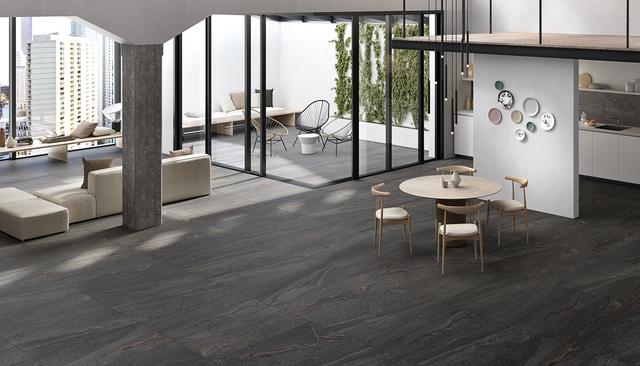
Vintage bathroom tiles are among the most searched retro interior styles, combining the nostalgic character of mid-century design with the practical requirements of a wet room. The right choice balances aesthetic authenticity with slip resistance, water repellency, and ease of cleaning.
Sixty by Emilceramica is designed precisely for this context. With soft matte finishes and earthy tones that recall mid-century ceramics, it captures the warmth and restraint of '50s and '60s bathroom design while meeting all the technical requirements of contemporary porcelain stoneware. It is an ideal choice for homeowners and designers looking to create a nostalgic atmosphere with a contemporary, liveable quality.
Vintage kitchen tiles
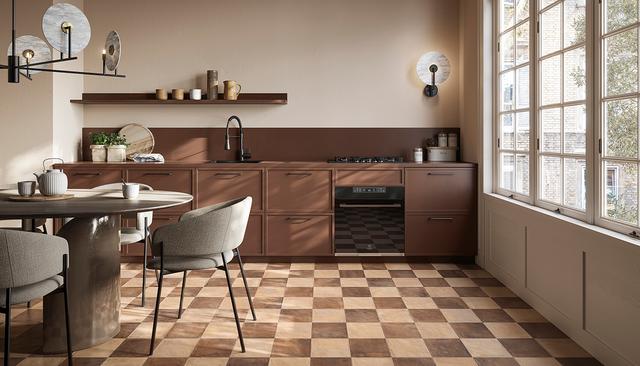
In the kitchen, vintage tile design tends toward warmer, more expressive choices: geometric patterns inspired by the 1960s and '70s, decorative cement-effect surfaces, and majolica finishes that introduce texture and tactile contrast to utilitarian spaces.
Be-Square by Emilceramica reinterprets this tradition in a contemporary key. Its large-format tiles explore the essential character of concrete, neutral, versatile, and architecturally precise, while the collection is enriched by two decorative layers: nine decorated cement tiles in balanced, refined shades, and majolica tiles with a tactile surface defined by sophisticated matt and gloss contrasts. A single decoration selected from both the cement and majolica mixes creates strongly characterized, visually distinctive surfaces, ideal for kitchens where the tile is designed to be noticed.
Vintage wood-effect tiles for living rooms and studies
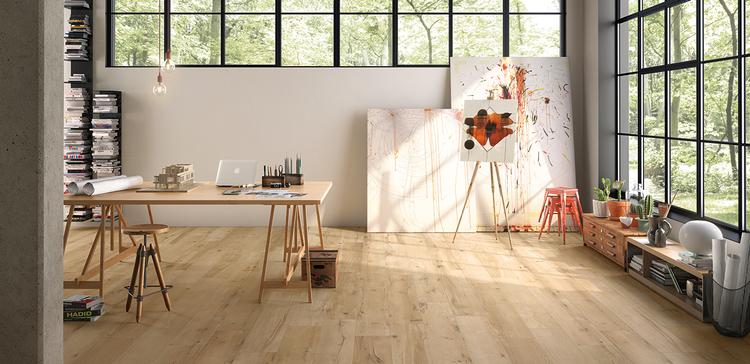
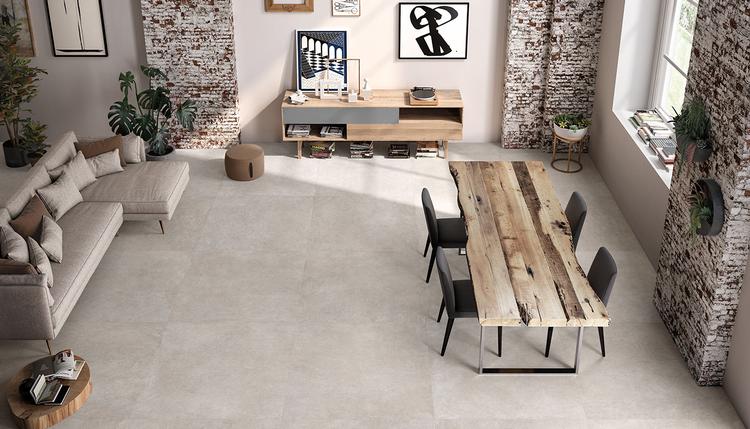
Wood-effect porcelain stoneware is one of the most effective ways to introduce vintage warmth into living rooms, studies, and corridors. The material faithfully reproduces the grain and tonal variations of natural wood, creating surfaces that feel authentic and alive, without the maintenance requirements of real timber.
This type of flooring evokes the character of 1960s and '70s interiors particularly well, serving as a refined backdrop for minimalist furnishings: dark or pale-toned furniture, vintage accessories, and pastel accents all pair naturally with wood-effect vintage tiles.
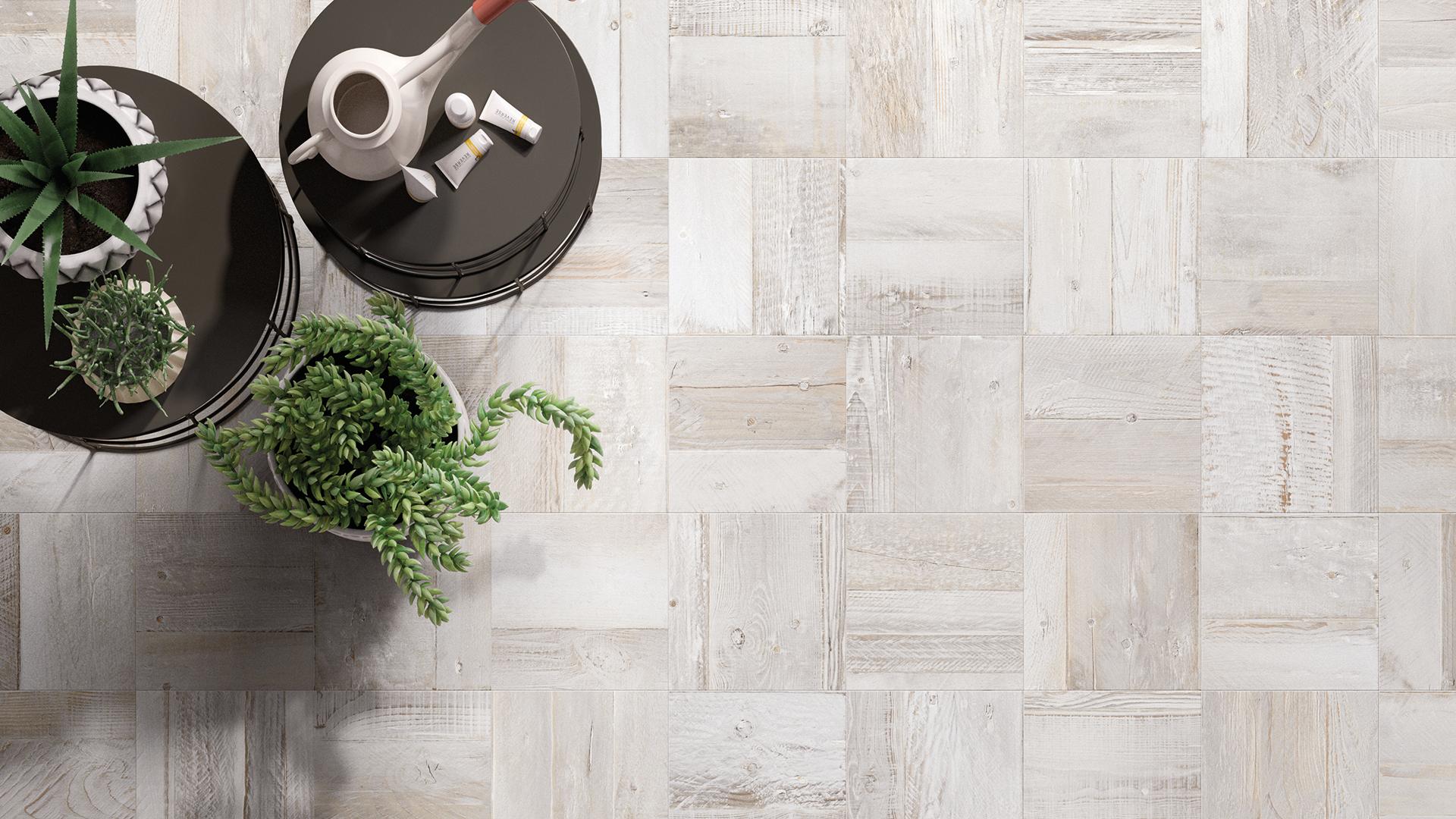
20twenty by Emilceramica interprets this direction with a distinctive contemporary sensibility. The 20×20 format creates dynamic, versatile spaces with an evolving, layered design quality. The alternation of different finishes within the same collection enables a wide range of creative compositions, from tonal and understated to graphically complex, making it equally well-suited to residential renovation and commercial hospitality projects.
FAQ: vintage tiles
What rooms are vintage tiles best suited to?
Vintage tiles work well in virtually any interior space. Majolica and decorative cement-effect tiles are particularly effective in bathrooms and kitchens, where their visual character can anchor the entire room. Wood-effect vintage tiles are ideal for living rooms, studies, and corridors. Geometric and optical-pattern tiles — inspired by '60s and '70s design — work across all spaces and are especially impactful in hallways and open-plan areas.
Can vintage tiles work in a modern interior?
Yes — this is one of the defining qualities of contemporary vintage-style porcelain stoneware. Collections like Sixty, Be-Square, and 20twenty by Emilceramica are designed to bridge retro aesthetics and modern design sensibility. They pair naturally with contemporary fixtures, neutral color schemes, and minimal furniture — making them versatile choices for both renovation projects and new builds.
How do I style a room with vintage style floor tiles?
The key principle is contrast and restraint: let the tile be the statement and keep other design elements simple. For '70s-inspired bathroom tiles, pair with white sanitaryware and simple metal fixtures in matte black or brass. For wood-effect vintage floors, opt for dark or pale-toned furniture with minimal ornamentation. For geometric kitchen tiles, keep wall colors neutral and cabinetry understated to let the pattern breathe.




Any Questions?
If you are looking for the ideal covering for your home or business or you have any questions about our collections, don’t hesitate to get in touch! Together we’ll find your perfect bespoke solution!
If you are looking for the ideal covering for your home or business or you have any questions about our collections, don’t hesitate to get in touch! Together we’ll find your perfect bespoke solution!
Enter the Emilgroup world!
Stay up to date with the latest news from the world of ceramics. Find out about our new collections, events and innovative applications of porcelain stoneware.